

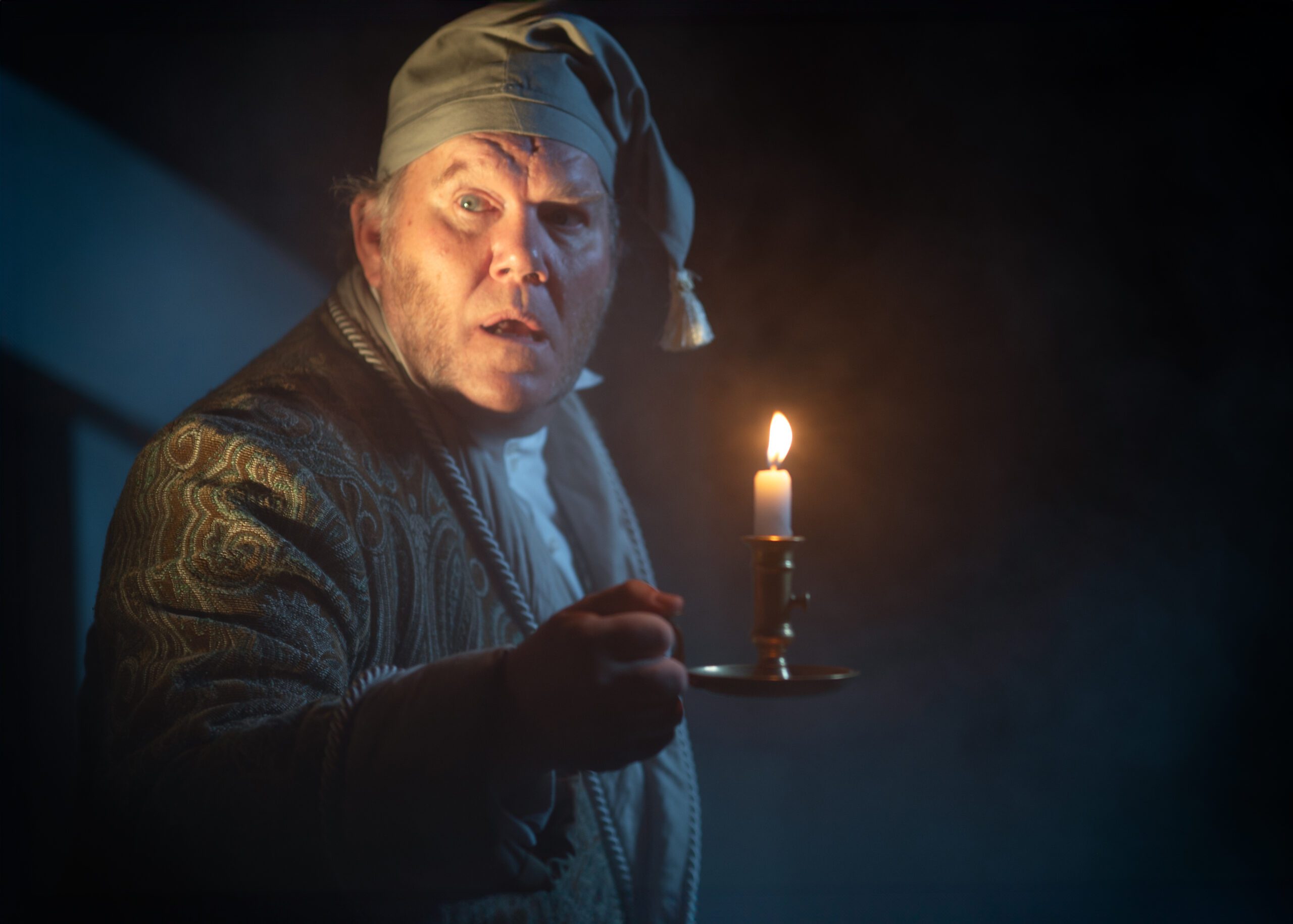
PLEASANT GROVE — There are holiday productions that simply mark the season, and then there are those that make you feel the Christmas magic. A Christmas Carol at The Ruth in Pleasant Grove—now in its inaugural year at the new venue—manages to do both with a blend of comforting tradition and surprising theatrics. Those who have been attending shows at The Hale for years will recognize the familiar bones of the show: the classic Dickens storyline paired with both traditional Christmas carols and original songs. But, wrapped around that familiarity is a fresh, high-quality production filled with talent, imaginative effects, and a visual polish that elevates this well-known tale far beyond “just another yearly revival.” With music and lyrics by Cody Hale and under the direction of David Morgan, this was the Christmas classic you expect, told with enough skill, spectacle, and heart to make it feel wonderfully new.
From the carolers singing in the lobby before the show to the final moments, The Ruth’s new space made itself known. The set design by Carter Thompson was striking—beautifully constructed, richly detailed, and lit in ways that maximized the venue’s upgraded technical capabilities. The quality of the costumes designed by Lauri Baird stood out immediately, followed shortly by the exciting use of lighting beneath the floorboards. Thin slivers of light cut upward through the cracks of the stage, making it appear as though the world beneath Scrooge’s feet was alive and simmering with the supernatural. That clever design choice set the tone for the entire production: familiar, yes, but not safe or sleepy. This was A Christmas Carol that wanted to remind you it contained ghosts, consequences, and a little bit of fright in its festive spirit.
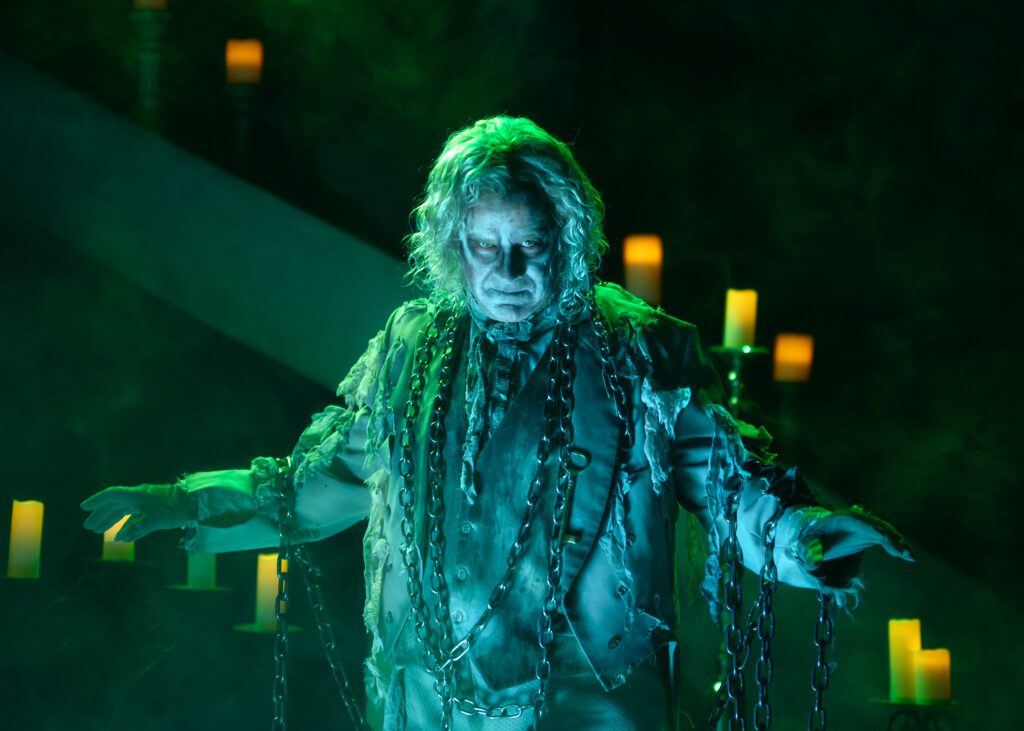
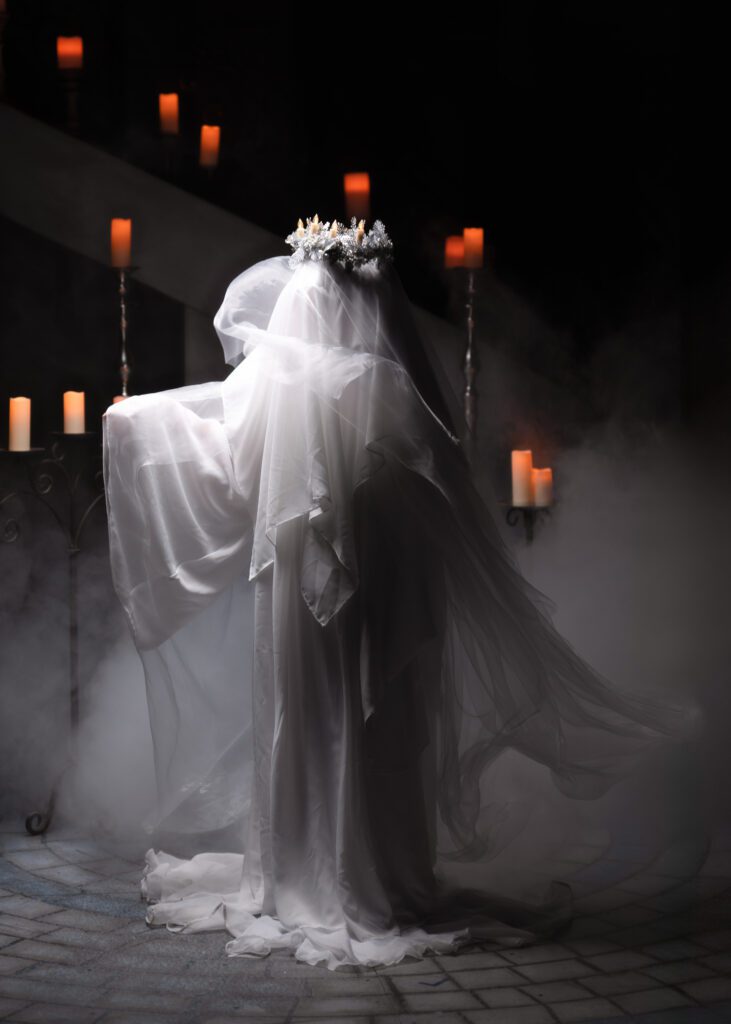
Speaking of ghosts, the special effects throughout the evening were impressive, and occasionally startling, in the best way. A chair sliding across the room with no visible assistance and a door swinging open on its own both drew audible reactions from the audience. The projections added atmosphere without feeling cheesy or distracting—a delicate balance in any production that incorporates digital elements. But the real showstopper was the ghost who hovered above the stage, floating with eerie calm. That moment alone earned a few gasps–mine included–and added a dramatic flair that complemented the storytelling without overpowering it. And of course, no Christmas Carol is complete without the Ghost of Christmas Yet to Come, who here appeared as a looming, shadowy giant. The scale and movement of that figure were genuinely ominous and lent weight to Scrooge’s most pivotal reckoning.
For all the technical mastery on display, the production never forgot that the emotional core of this story rests on its characters. Daniel Hess carried the show as Ebenezer Scrooge with an engaging blend of humor, sharp timing, and heartfelt transformation. His delivery felt natural, not forced, and he managed to make a character we all know intimately feel specific and alive. Scrooge’s grumpier moments were biting in all the right ways, and his later warmth felt earned rather than rushed. It takes real nuance to make a character’s emotional arc resonate in a story as familiar as this one, and he did so with ease. He was a true delight to watch, and I noticed many audience members were consumed by his stage presence.
The supporting cast was equally strong. Whether playing cheerful carolers, bustling townspeople, or members of the Cratchit family, each performer contributed energy and personality. The musical numbers—some instantly recognizable, others new—were performed with crisp harmonies and clear storytelling intention. The children in the cast deserve special mention, as younger performers can often fade into the background. Here, though, they held their own, adding charm and enthusiasm without sacrificing professionalism.
I’ll admit, the show had me slightly nervous in its opening moments. A narration voiceover began the story, setting a mood that initially made me wonder if the entire production would rely on narration rather than character-driven interaction. But thankfully, that concern evaporated quickly. The narration faded out at just the right time, handing the story back to the actors and allowing the play to breathe naturally. Once the narration stepped aside, the show settled comfortably into the kind of rich, dialogue-centered storytelling audiences expect. It ended up being a strong tonal choice rather than an overused device.
Another pleasant surprise was the humor woven throughout the production. Dickens’ story certainly has its darker and more emotional moments, but this company knew how to balance them with lighthearted beats. A well-timed joke from Scrooge, a playful interaction during a musical number, or quips between Scrooge and the narrator kept the energy dynamic and the audience engaged. These small touches made the heavier scenes more impactful and underscored the joy that ultimately defines the tale.
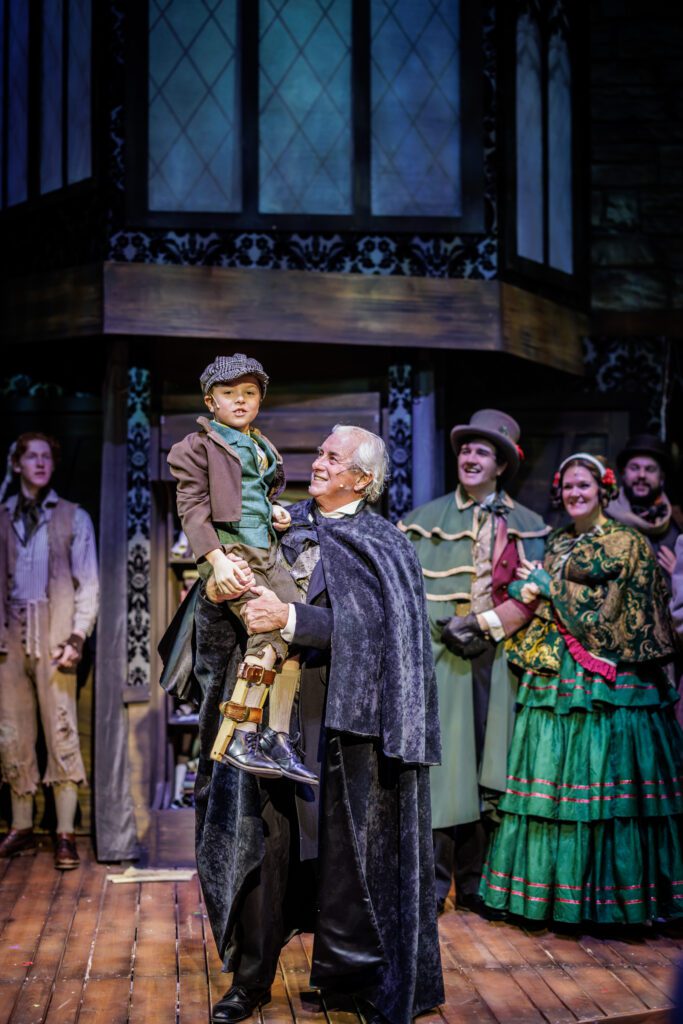
By the end of the evening, it was clear that this company’s long-running tradition of staging A Christmas Carol has evolved beautifully in its new home. The Ruth provides the technical tools and aesthetic space needed to elevate the production, and the cast and creative team rose confidently to the occasion. The result is a show that honors the classic story we all know—complete with ghosts, redemption, and the indomitable spirit of Christmas—while embracing inventive theatricality and high production value.
If you’re looking for a holiday production that delivers nostalgia, artistry, and a touch of spectacle, this Christmas Carol is well worth your time. It captures the heart of the season with warmth, talent, and a bit of magic—exactly what a Christmas classic should do.
[box] A Christmas Carol is performed by two casts. This review was based on the MWF cast. Details for both can be found in the playbill online at https://www.theruth.org/digital-playbill/a-christmas-carol-2025. Tickets can also be purchased online ranging from $34 to $68. The show runs through December 27. [/box]