

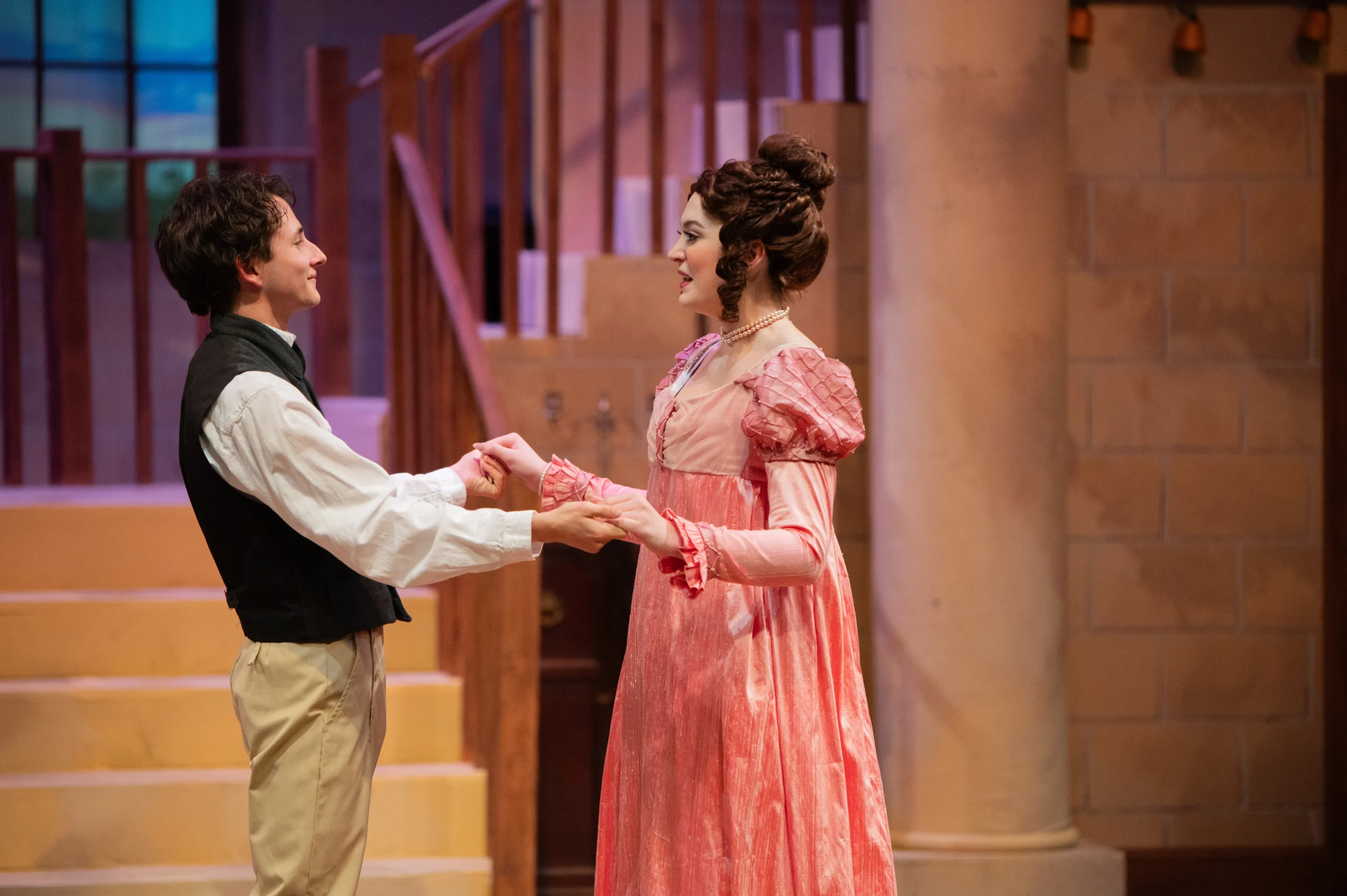
LOGAN — Utah State University Theatre presented a truly delightful production starting the holiday season. They performed Lauren Gunderson and Margot Melcon’s The Wickhams: Christmas at Pemberley directed by Richie Call with assistant director Emma Colburn. This play is an engaging continuation of Jane Austen’s Pride and Prejudice. This sequel is set at Christmas two years after the original novel’s conclusion.
This play is the second in a trilogy of plays by Gunderson and Melcon. All three center on a Christmas setting two years after the Pride and Prejudice finale. The playwrights featured things they felt people universally love: Austen’s characters and Christmas. As a contemporary play, it incorporates 21st-century commentary and modern sensibilities. These moments provide interesting contemporary commentary and character dynamics, highlighting the regressive and limiting social conventions of that era.
The familiar faces of Elizabeth and Darcy, Lydia and George Wickham feature, and Mrs. Reynolds, housekeeper of Pemberley and a minor character in the novel. For anyone who felt that Lydia’s resolution at the conclusion of Pride and Prejudice was incomplete or unsatisfying, this play provides a resolution. The cast includes two additional, newly created servants, Cassie and Brian, who add their perspective of the Christmas holidays.
Performances
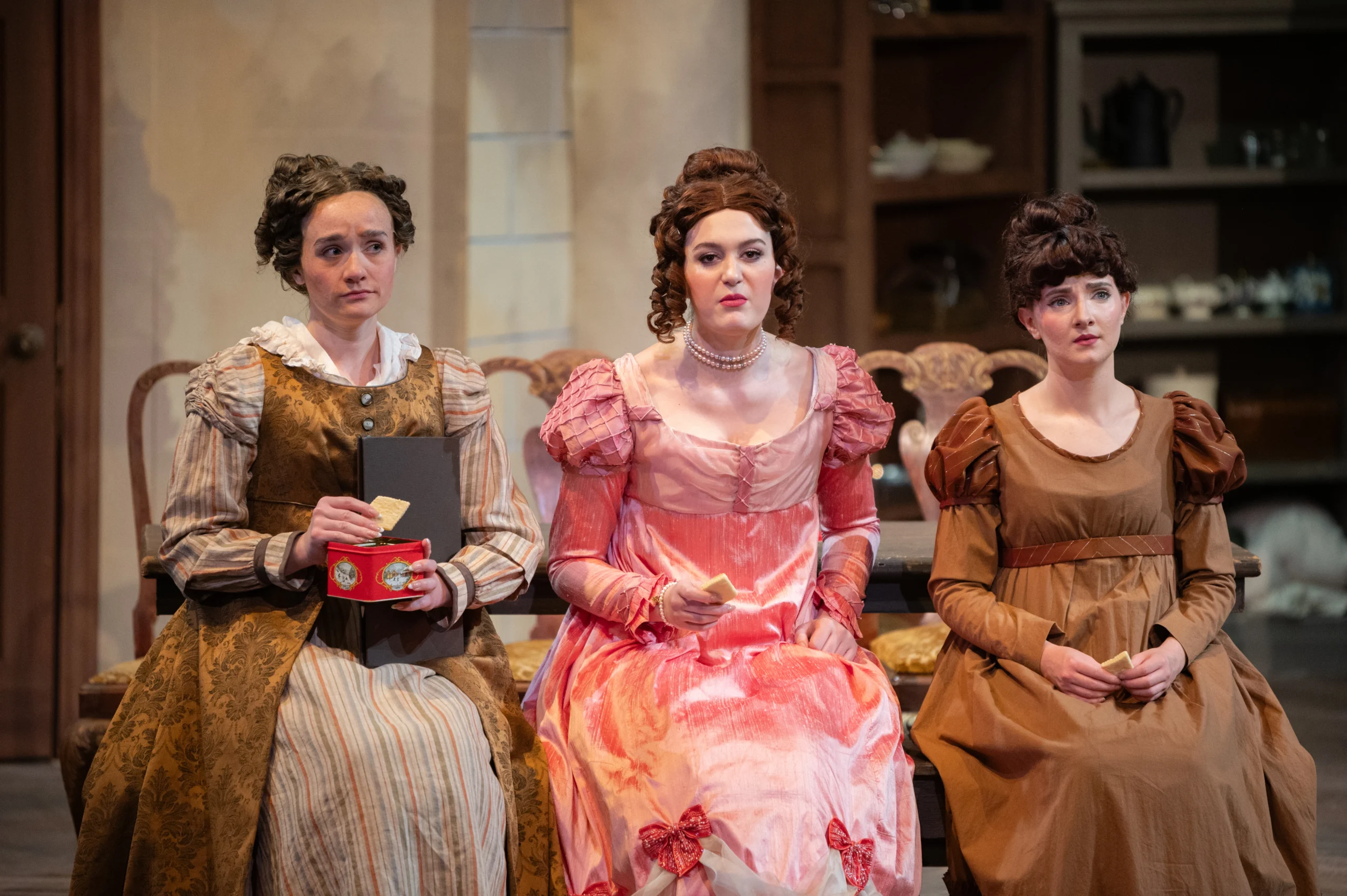
The entire play happens on a single set piece: the servants’ quarters in the basement of Pemberley. Consequently, Mrs. Reynolds, played by Ariana Whatcott, is a main featured character. In this expanded role, Mrs. Reynolds acts in a leadership role among the servants and as a pseudo-matriarch for the household.
Mrs. Reynolds balances three roles: managing the Darcys’ household, leading her fellow servants, and navigating a lingering, maternal relationship with George Wickham. Whatcott is a remarkably strong performer in this role. She masterfully controls the energy and rhythm of each scene. Conflict and humor inevitably ensue in her interactions with this variety of characters. Whatcott proves to be an absolute linchpin in the pacing of her scenes, handling both dramatic and comedic beats with confidence. Whatcott interacts very well with the other actors, offering subtle but effective reactions that clearly convey her intentions and emotional stake in different situations.
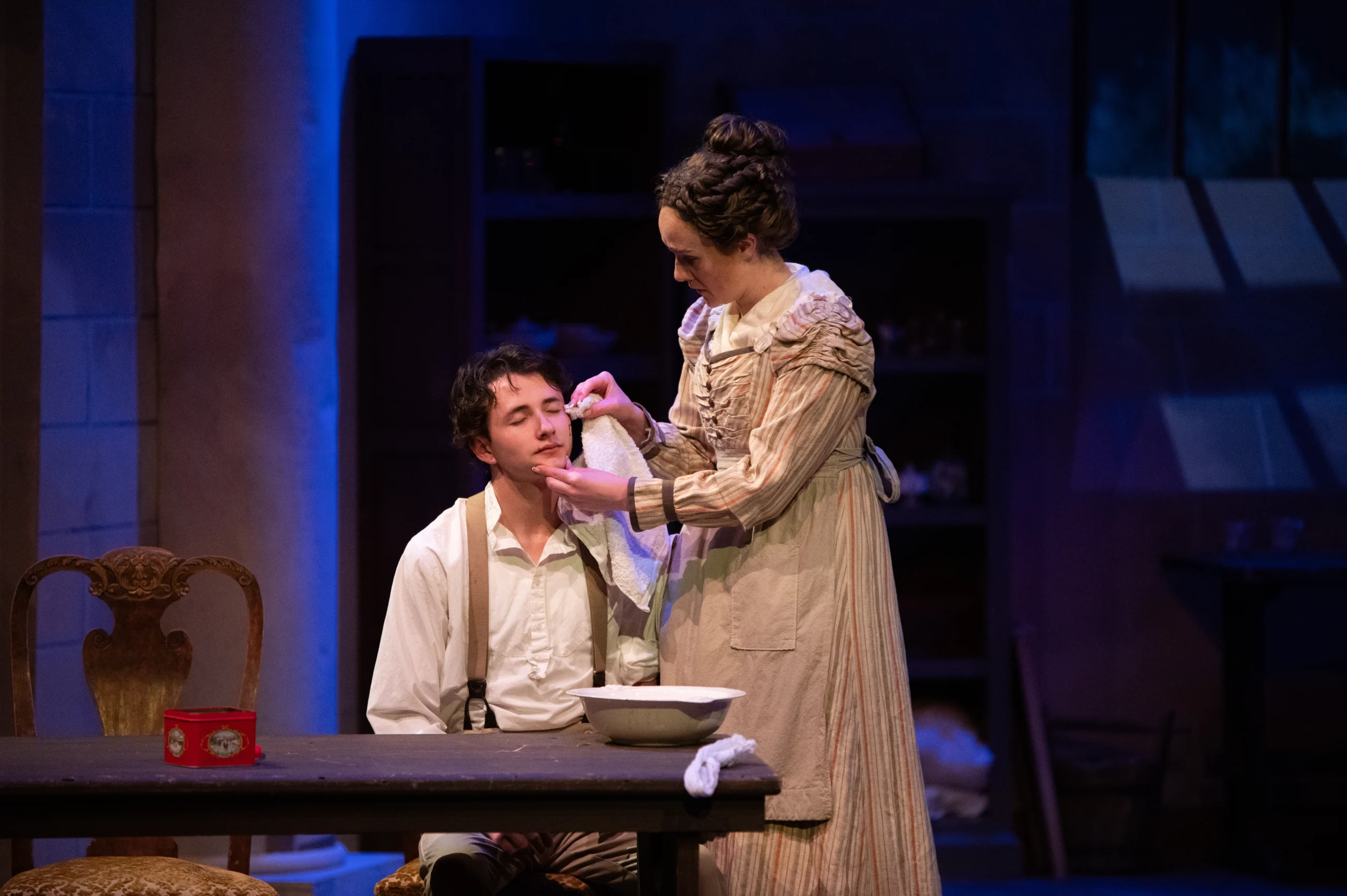
Lydia and George Wickham, played by Emily Alvey-Despain and Niko Barlow, respectively, are the primary couple driving the plot, creating a compelling dynamic conflict.
Alvey-Despain’s portrayal of Lydia Wickham (née Bennett) requires performing a wide range of emotions. While Lydia is often called a “silly girl”, this story brings significant depth to her, though it retains some of her more exaggerated elements. However, one moment where Lydia jumps and squeals excitedly seems slightly over-the-top compared to the production’s general tone. Alvey-Despain’s full commitment to this emotional range does allow the contrast highlighting the character’s internal struggle and path toward self-confidence by the play’s end.
Niko Barlow’s George Wickham easily transitions between a sweet, suave persona and a conniving, calculating demeanor. Barlow manages to make Wickham subtly endearing throughout. Barlow’s performance captures the best of George Wickham’s essential qualities: his mastery of communication and his capacity for manipulation and lies. One is almost convinced upon his first appearance the story might offer some sort of genuine redemption arc for Wickham. However, it is a relief to find that Wickham is, refreshingly, still positioned as the core antagonist in these characters’ lives.
Supporting Roles and Newcomers
Grace Lynn Owen and Jonah Newton successfully infused fresh energy into the famous couple Elizabeth Darcy (née Bennett) and Mr. Darcy. While they play a supporting part, their interactions are consistent to the successful resolution of their famous love story. Their lingering frustrations with Lydia marriage, which Darcy facilitated, also feel real.
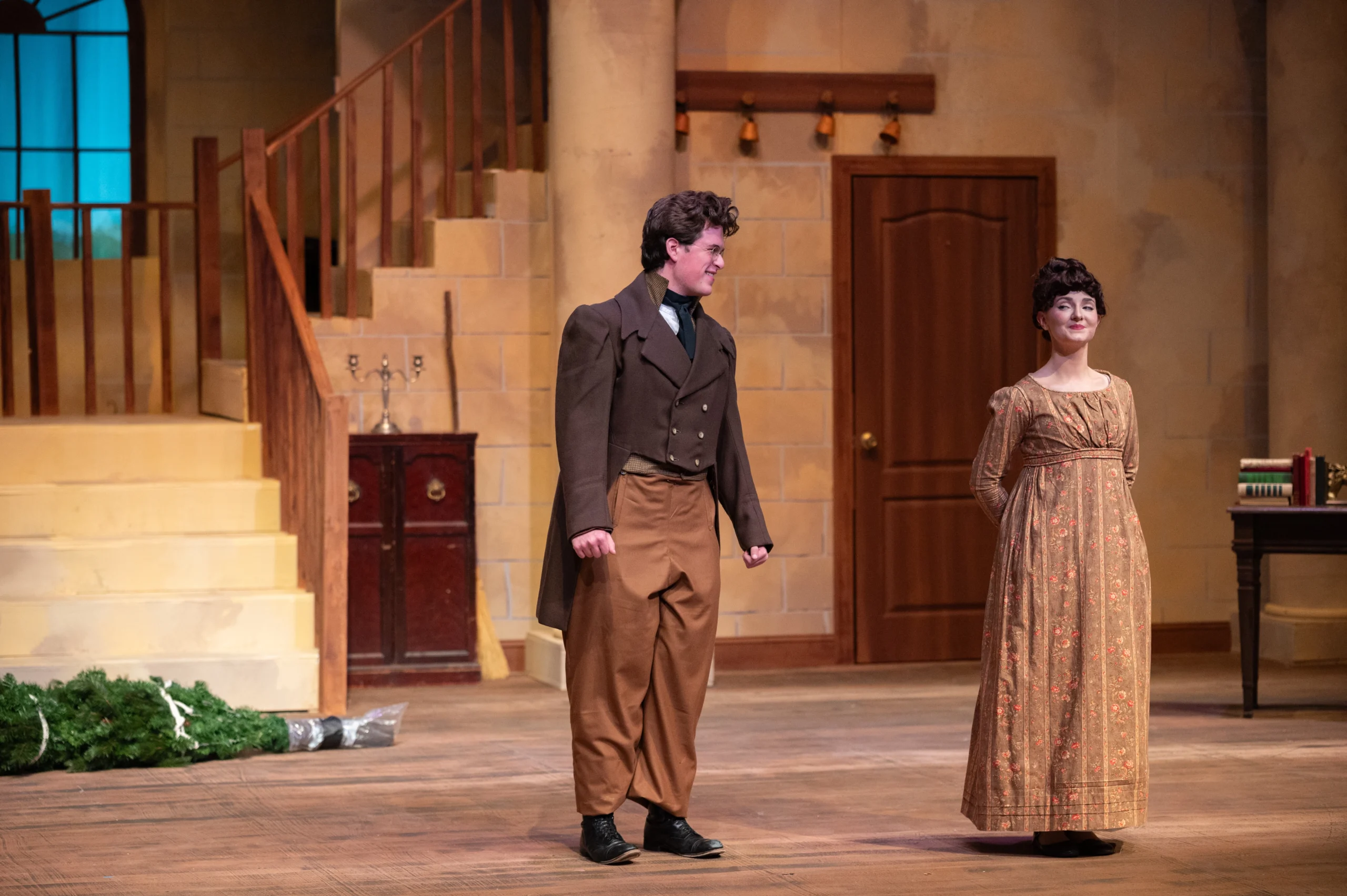
Brian and Cassie are essential new characters. They introduce a plot thread focusing on the servants’ experience during the Christmas holidays in the era. Cache Despain, playing Brian, delivered arguably the best dialect of the production. Despain’s speaking was natural, easy, and authentic. I wondered if perhaps the servants were coached to have a more natural intonation, while the upper-class characters were coached to utilize a much stiffer style. All the same, I felt Cache Despain displayed a great skill in dialect performance.
Esther (Es) Barnes’ portrayal of Cassie was confident and engaging, as she fights for respect and dignity. Cassie is perhaps the most modern of the women, offering an intentional insertion of modern sensibilities and strength into the story. This perspective creates natural conflict with the more traditional conventions. Barnes persuasive performance as Cassie leads Brian to growth and allows Cassie and Lydia to share an illuminating conversation and connection.
Design and Technical Execution
The overall design was wonderful. The costumes and wigs stood out as the most impressively cohesive element, designed by costume designer Leah Brown and assistant costume designer Natalie Pulsipher. The costumes and gowns were highly effective in conveying the character’s class positions.
The servants—Mrs. Reynolds, Cassie, and Brian—were dressed in muted, brown tones. They visually blended into the set of the servants’ quarters. Conversely, the Darcys’ were dressed in deeper, brighter, and more vibrant colors, which made them stand out. Even without prior knowledge of the characters, their position within the household was immediately clear.
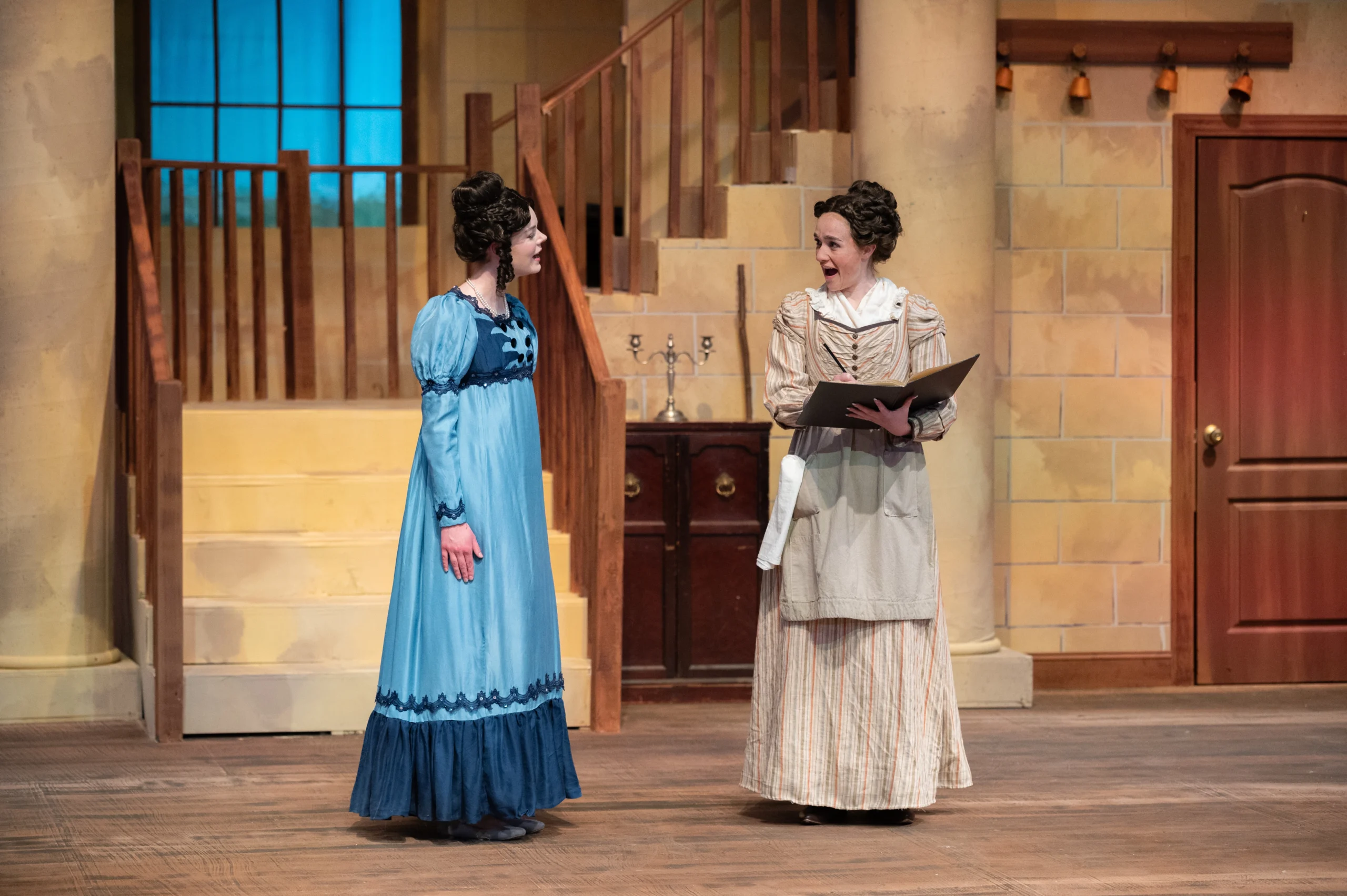
This intentional visual cue extended to the design of the womens’ wigs. Elizabeth’s wig was elaborate and complex, signifying her elevated status. Lydia’s wig was less elaborate, but still incorporated some braiding and twists. Mrs. Reynolds’ wig, a simpler pulled-back bun with minimal twists, reflected her respectable but working-class position. While the visual storytelling was strong, Lydia’s wig featured more voluminous front curled bangs that swung distractingly in front of her face during scenes.
Lighting design by Samantha Clinger and projection design by Audrey Allen were also effective. The production features scenes in the morning, daytime, evening, and even nighttime, creating a wide variety of natural lighting conditions to match the context. The lighting shifted naturally to visually indicate the passage of time. The projections through windows in the set were equally effective in matching the time of day. A lovely snow effect was a nice touch during the finale.
The performance is perform unmiked, which was well done and a natural match for the Austen story. Their performances were easy to hear, allowing for a clear understanding of the dialogue, which is crucial for a production very dependent on character-driven conversation.
Final Remarks
Overall, this production of The Wickhams: Christmas at Pemberley was a very fun evening. Enjoyment is likely proportional to your love of the source material and interest in a continued story from new writers. It plays exceptionally well to an audience of Austen fans who are willing to love this continuation of the Pride and Prejudice story. It features characters they know and love alongside two rather endearing new additions. Most notably, the expanded role of the housekeeper, Mrs. Reynolds, brings the story together, and Ariana Whatcott delivers a strong performance. The play overall feels very pleasant and accessible in its approach to love, holiday spirit, and satisfying emotional arcs of the characters. I am persuaded by the playwrights that it is a truth universally acknowledged that a combination of Christmas and Austen is lovely entertainment indeed.
[box] The Wickhams: Christmas at Pemberley plays at Utah State University in the Morgan Theater at the Chase Fine Arts Center (1150 East 700 N, Logan UT) on November 18th-21st at 7:00 PM. A matinee plays 1:00pm on November 22nd. Tickets are $18-$23. Utah State Theatre lists the show as a PG equivalent rating. For more information, visit https://artsci.usu.edu/theatre-arts/productions/the-wickhams [/box]