

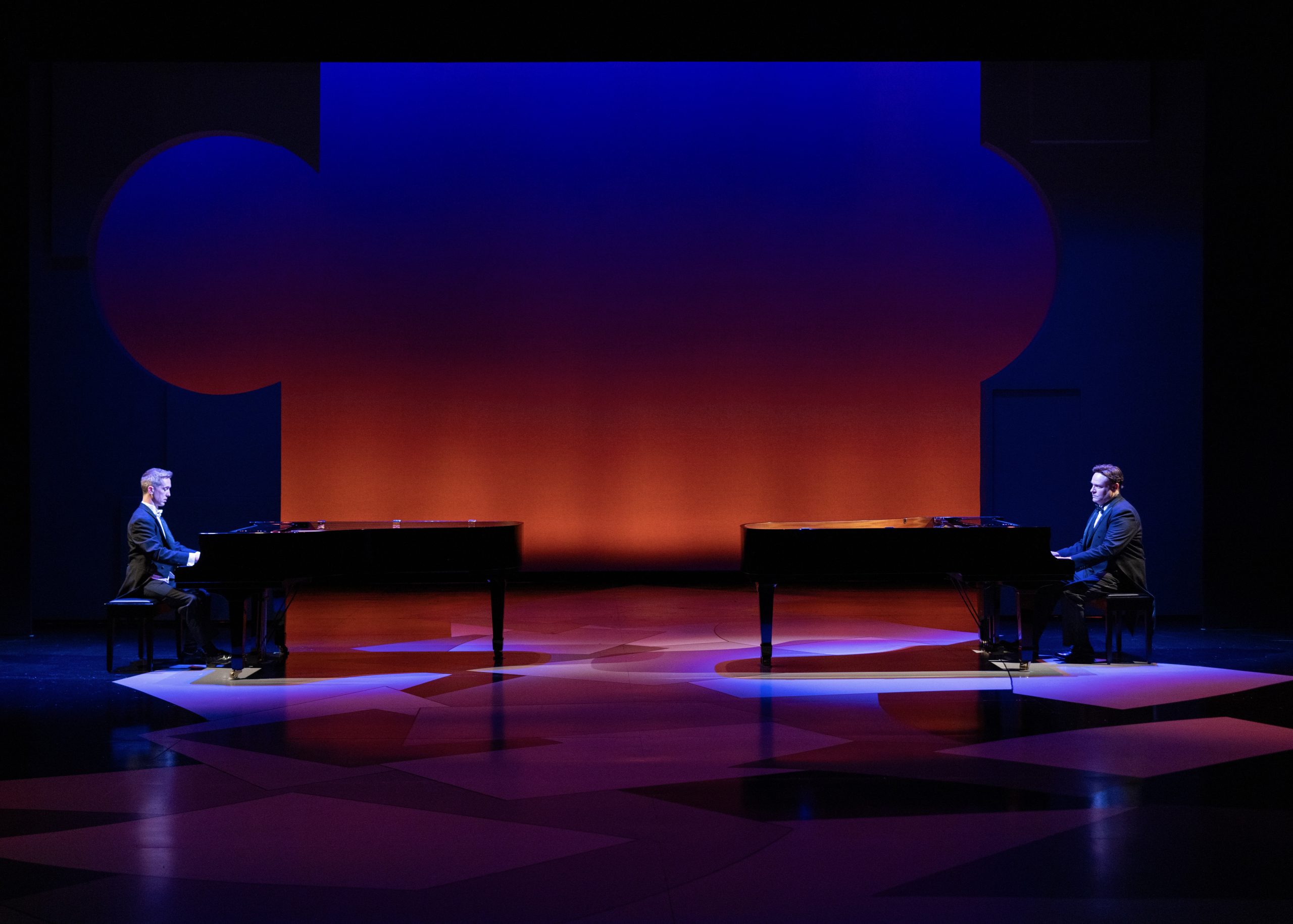
SALT LAKE CITY— I recently had the privilege of attending 2 Pianos 4 Hands by Ted Dykstra and Richard Greenblatt, directed by Tom Frey, starring Richard Todd Adams and Matthew McGloin at the Pioneer Theatre Company‘s Meldrum Theatre. The show focuses on the paths taken by two men on their journeys to become classical pianists.
I wasn’t sure quite what to expect with this production. Although the show is celebrating its thirty year anniversary and is one of the most successful Canadian plays to date, it was completely new to me. I expected plenty of classical piano music, but I didn’t expect to spend so much of the first act deep belly laughing. It was a cathartic night out. Having been a child who didn’t want to practice the piano, piano teacher to wiggly young boys, and the nagging parent over these children, I was rolling in my seat throughout the show. Especially as Richard Todd Adams switched seamlessly between his main role of Ted and the role of an older female piano teacher for Richard, played by Mathew McGloin.
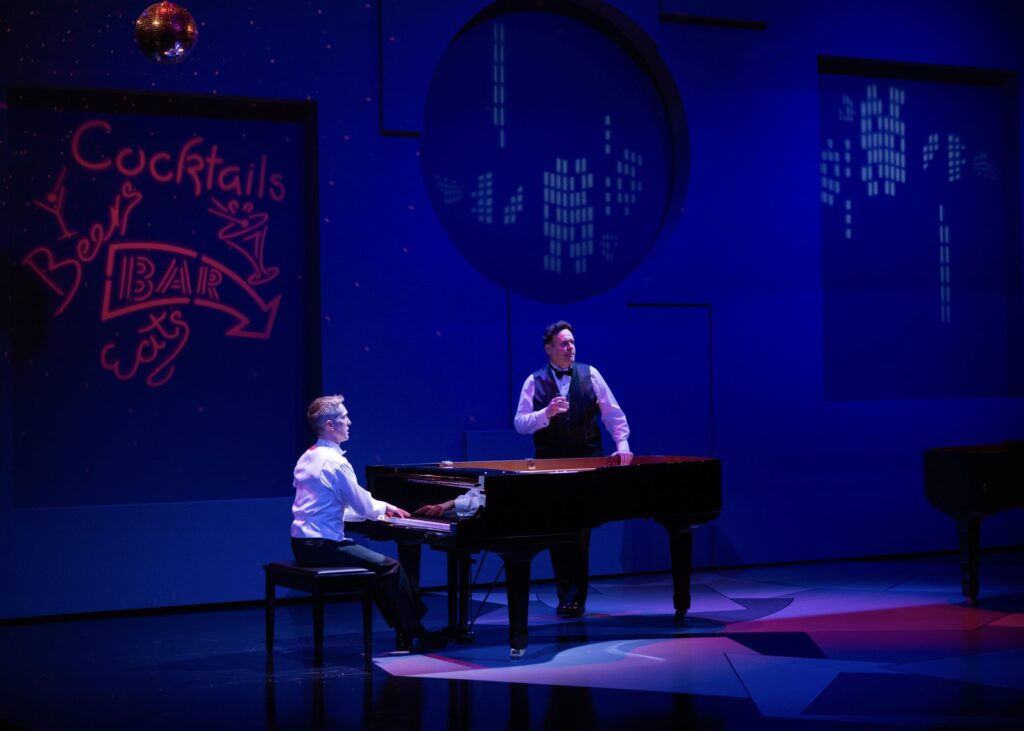
Adams journeys through a gauntlet of accents and dialects as the show progresses, from portraying piano teachers from Germany and Italy to a Southern Jazz pianist, then to the slow bored drawl of the Elks competition announcer. McGloin equally rises to the occasion as he becomes a French piano adjudicator whose pronunciation of the word “piece” comes out as “piss” during Richie’s and Teddy’s first duet competition playing, “In the Hall of the Mountain King.” This scene in particular is rapid and high pace with great moments of panic and problem solving from Ted when Richard freezes up.
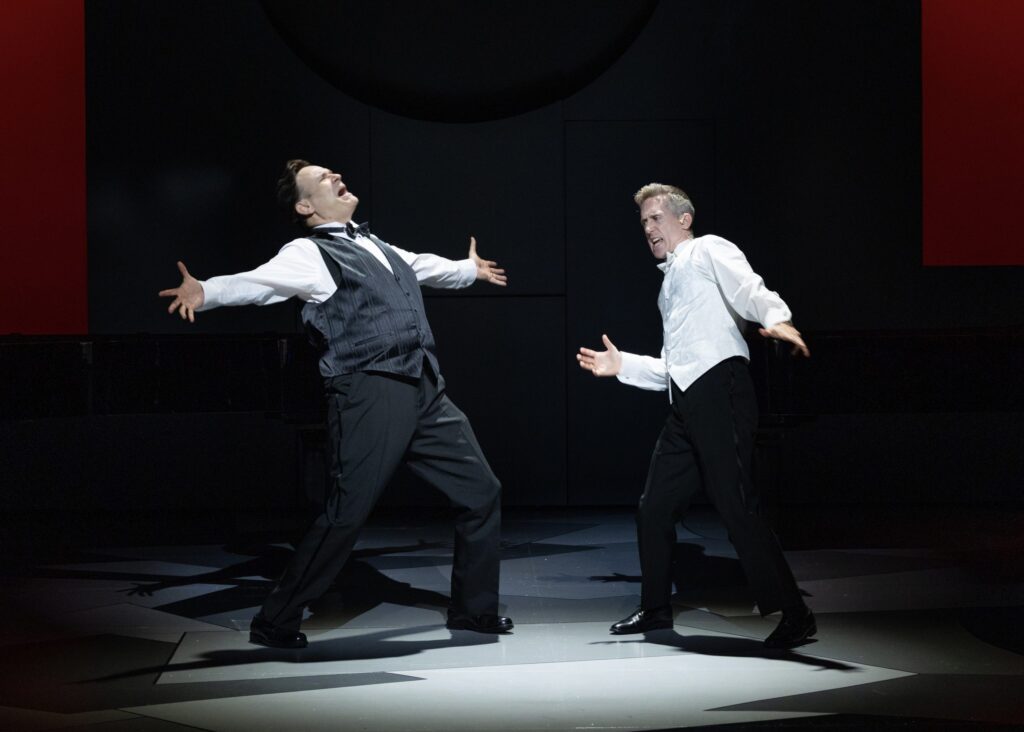
The production, especially hilarious in the first act, also has many emotionally charged scenes as the two young men battle with their desires to continue to pursue piano. As high paced as many of the scenes are, there are delicious moments of silence and pausing to be found as well, such as in the scene following Richard’s argument with his dad about his plans for the future. Silence on stage can often feel awkward, but Adams takes that moment and basks in it – turning it into a truly strong moment.
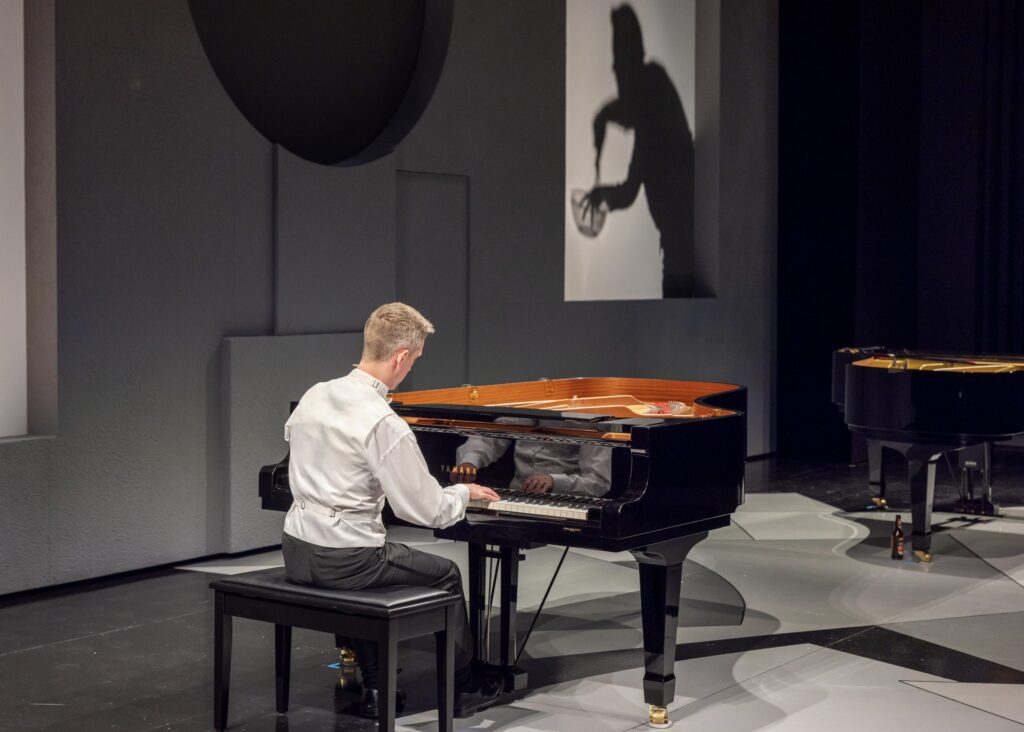
The chemistry between Adams and McGloin was so in sync that I can only begin to imagine the number of times they’ve done these scenes. Yet, the energy and camaraderie, and occasional rivalry, makes the show feel organic and natural and not endlessly rehearsed. One scene to really display this was when both young men are taking an oral exam that reviews composers and musical terms. Not only did they have to get through a huge amount of facts and information, but they had to do it rapidly while flipping between roles as student versus examiner.
Although this production was only a cast of two, the lighting design by Michael Gilliam was like having a third cast member. Of course the lighting helped with rapid transitions between so many vignettes, but it also created the moods and told the story. This was especially evident in the final duet, “Concerto in D minor, BWV 1052, 1st Movement (J.S. Bach).” It turned a whole night into day, told entirely with smooth colors. I could watch that final scene over and over just for the beauty of the lighting, and then throw in the beauty of the music, and the emotions of Adams and McGloin as they played; there you’ll find no finer escape from reality than that moment. So often in theatre there is a heavy reliance on special lighting gobos to create scenes, and while those could be found throughout this production, it takes an amazing lighting designer and crew to paint a set and backdrop so smoothly with lighting that it is like seeing a most incredible sunset.
The set for this production was designed by Yoon Bae. It was crisp and clean, utilizing gray and black geometric designs on the floor that added visual interest while allowing the black grand pianos to really stand in the spotlight. The background consisted of two rectangle windows with a circular window in the middle of a large wall. The screens in the window shapes aloud for lighting effects along with creating silhouettes of a parent while the boys practiced. The set was basic enough to feel like a respectable concert hall, but complex enough to easily create a variety of spaces through simple props or lighting.
My only complaint of the night was the rumble of the Trax’s trains passing during the performance, but in spite of that it was an absolutely incredible evening with some of the best talent I’ve seen on stage in a long while. This production has easily soared into the highest rankings of favorite productions I have attended. I cannot recommend it enough, especially for those who have a love for piano music. It takes a special duo to be able to perform a production like this and Richard Todd Adams and Mathew McGloin definitely rise to the occasion.
[box] 2 Pianos 4 Hands plays through Sept. 27 in the Meldrum Theatre at the Einar Nielsen Field House on the University of Utah campus (300 S 1400 E, Salt Lake City). Tickets are $44-$62. For more information, visit pioneertheatre.org. [box]