
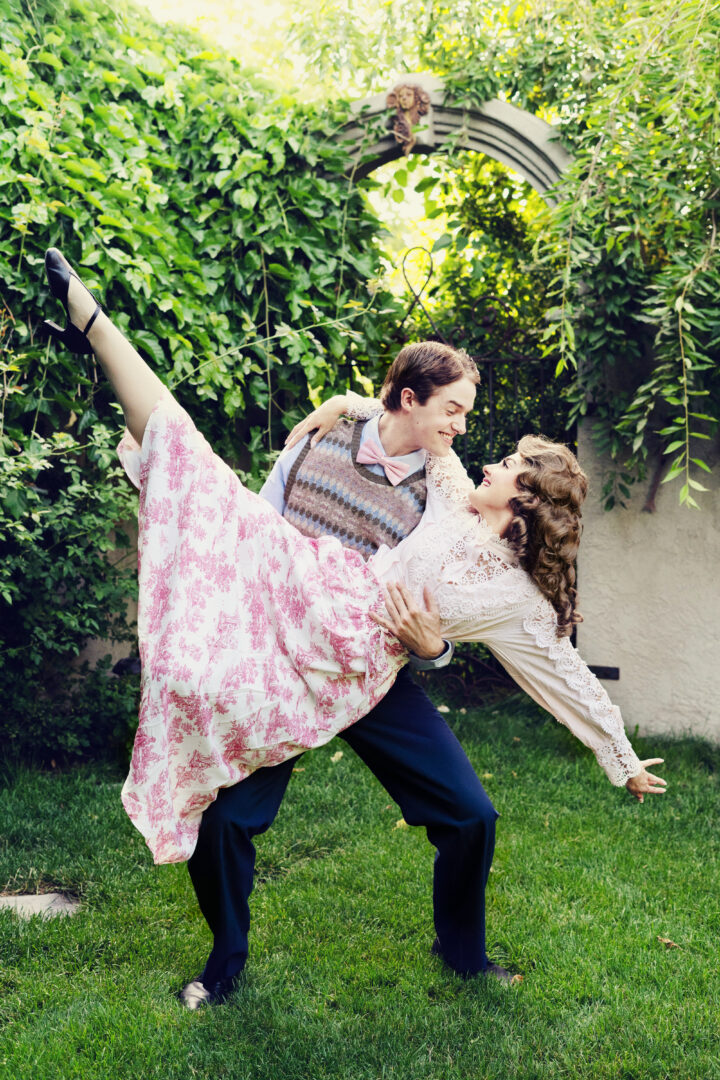
OREM — As the grand finale of Scera Shell’s summer season, Hello, Dolly! transports the audience back to the turn of the century. With a timeless book by Michael Stewart, moving music and lyrics by Jerry Herman, and based on the play by Thornton Wilder, Scera’s production of Hello, Dolly! brings to life the magic of the musical. The contagious energy of each performance, the live orchestra, and the impressive set and costume designs create an unforgettable evening in New York.
Allison Books commands the stage with maturity and grace as titular character Dolly Gallagher Levi. Her singing voice is smooth and crisp, but it is her comedic timing that sets her apart. While her opening scenes move quickly, sometimes running over her charm with its pace, Books lands in the pocket of wit and vulnerability by Act Two. Her dinner scene with Bryan Harper as Horace Vandergelder, where Dolly continually talks circles around the confused Horace, caused me and the entire audience to laugh uproariously. Harper complements Books’ portrayal of Dolly with a gruff, raspy Horace that is slow to bend to anyone else’s ideas or opinions. The pair grow in confidence as the show progresses, having significant stage presences by the end of the musical.
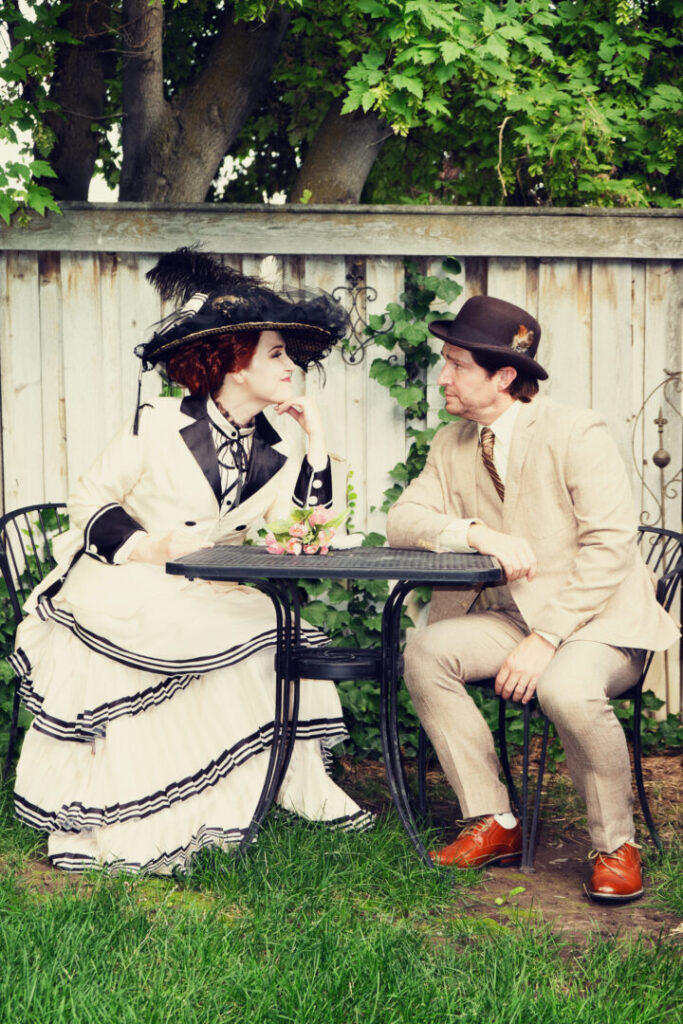
Chloe Henry showcases her magnificent singing voice in her role as Irene Malloy. Her rendition of “Ribbons Down My Back” sent shivers down my own due to her control and ease with which she sings the impressive scales. Henry’s comfortable nature extends beyond her singing, performing a very grounded Irene, especially in contrast to Rebecca Varney’s youthful Minnie Fay. Varney’s bouncing monologuing entrance highlights both her skill and the brilliant direction of Kurt Elison. Elison utilizes passing ensemble members to accentuate Varney’s natural expressiveness and build the world of the New York street.
Jacob Nilson as the dependable Cornelius Hackl provides a genuine, intensely sincere portrayal of the head clerk. Combined with the exuberant Joey Thompson as Barnaby Tucker, this duo masters the sincerity of tone and the comedy of physicality. Because they each are so genuine, anytime they learn to dance, hide under tables, or trip all over onstage, the visual joke is that much funnier. It is clear by the performances of the main leads that director Kurt Elison brilliantly knows how to bring the best out of his actors.
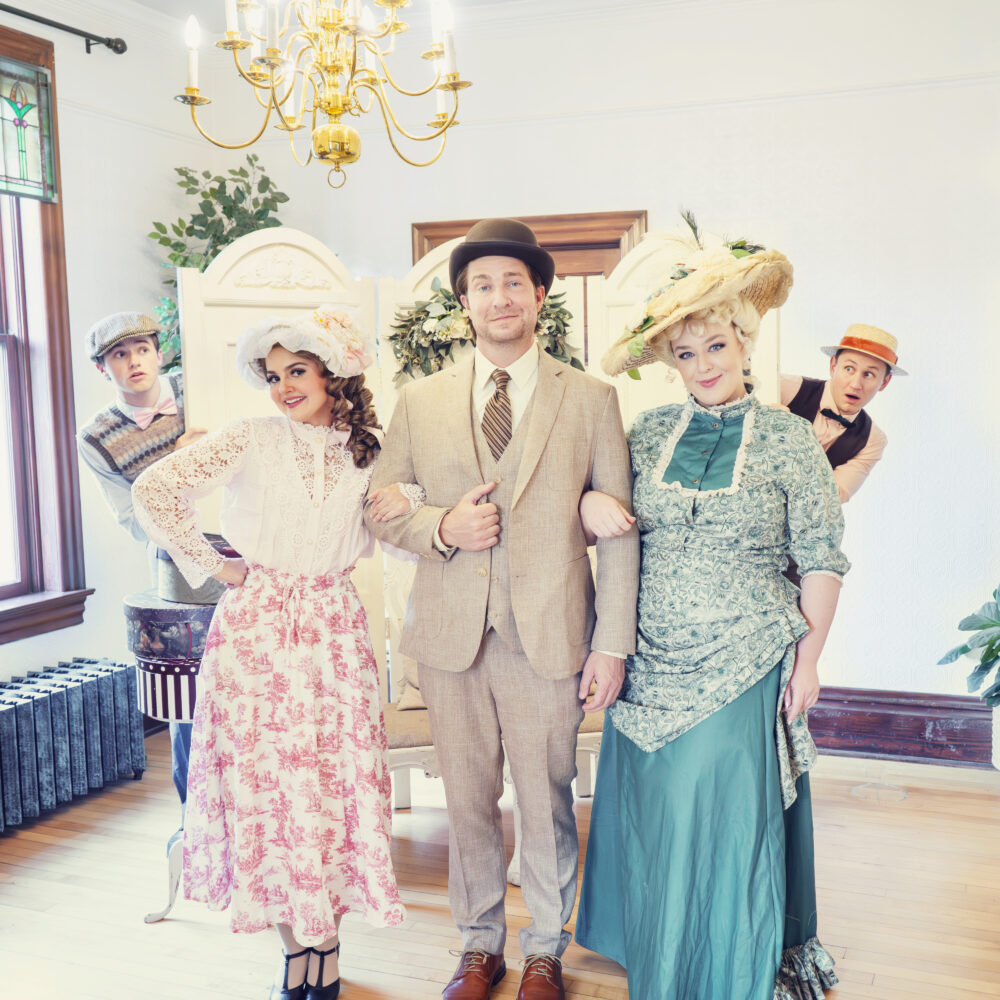
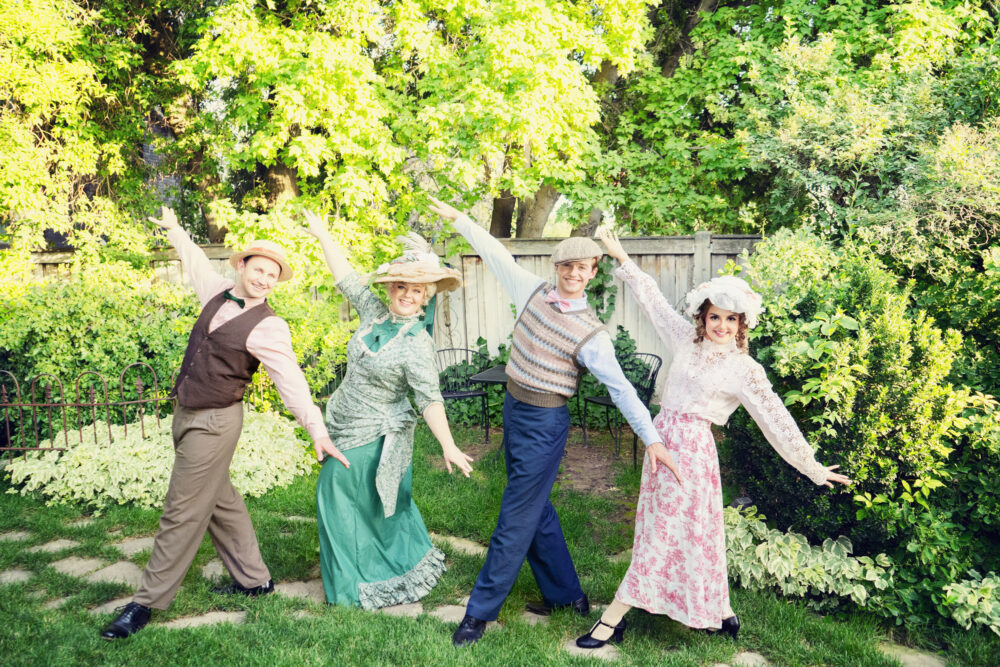
However, Elison’s meaningful direction applies not only to the main leads, but to everyone in the cast. The ensemble steals the show in many moments, energizing the audience throughout the duration of the piece. This is in large part due to the inspired choreography of Robbie Cromwell. Not only are the dance performances exceptional, but the choreography invites a profound look into the beauty of dance as a whole. Specifically in the song, “Dancing,” Cromwell’s use of slow, synchronized, and explorative movement made me consider the joy that dancing has had in my own life. While this may not be every audience member’s experience, Cromwell’s ability to channel his choreography into the greater, nuanced meaning of the piece shows his advanced skill as a choreographer.
Additionally, the choreography and performances of the male ensemble during the song, “Hello, Dolly!” is especially impressive. The sheer number of moves during the almost 7-minute long song displays the dedication and talent of the ensemble members. This is true of the entire ensemble throughout the show. Their only fault is the occasional need for confidence as they enter. Probably a result of opening night nerves, the large ensemble would sometimes miss a few of the first notes of a song as they entered the stage. However, when they are all onstage together, their singing is powerful and dynamic.
It has been over 20 years since the Scera Shell has had a live orchestra for one of their performances. The live orchestra in this production enhances the largeness of the show, making it feel that it extends even beyond the dimension that you can see onstage. Conductor Marden Pond confidently leads the musicians to stirringly play the melodies, particularly in mostly instrumental songs like, “Dancing,” and “The Waiter’s Gallop.”
Scenic designer Chase Ramsey creates numerous pastel storefronts that smoothly transport the audience from Yonkers to New York City. Ramsey’s design of Malloy’s millinery is particularly innovative as the set folds out into the pink, bow-abounding hat shop. The set evokes a music box feel with the unfolding of its layers, and it matches the style of the beautiful costume design by Deborah Bowman. Similar in its pastel, eclectic nature, Bowman’s designs draw away from a literal representation of the era to create a fun-loving music box onstage. Her use of a multitude of stunning dresses that remain functional for dancing only add to the visual appeal of the piece.
This sense of a music box is also highlighted by Caleb Wallengren’s dazzling lighting design. While fairly subtle in Act One, Wallengren’s designs shine in Act Two with bright bulbs lining the Harmonia Gardens Restaurant. Additionally, his choice to use a deep purple spotlight for Dolly at times adds to her conflicted internal dialogue. When she has a bright white spotlight at the end of the show, once she has made her decision to move forward, the change in lighting is equally moving and exciting for the audience.
As a newcomer to Hello, Dolly! myself, I was highly impressed that I enjoyed the script of the show just as much as the performances. To anyone who might think this classic musical relies on nostalgia for current productions, I’d invite you to see Scera’s production of it before making any judgments. You might not see another production of Hello, Dolly! this good in a while.
[box] Hello, Dolly! is playing through August 19th at 8pm at Scera Shell’s Outdoor Theatre at 600 S 400 E, (Orem). Tickets range from $10-$25. For more information, please visit https://scera.org/events/hello-dolly/. [/box]