

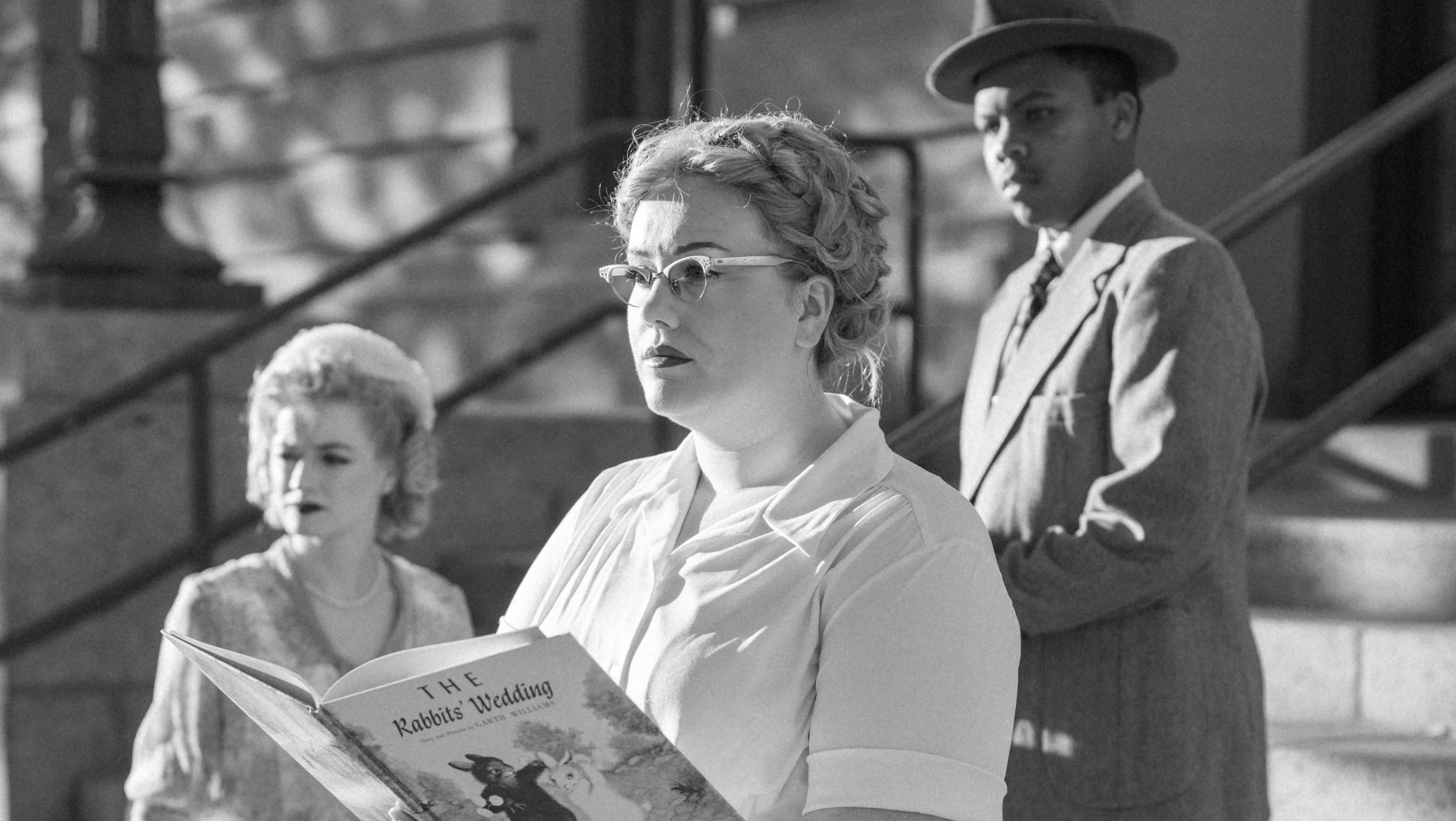
OGDEN — In 1959, the Civil Rights Movement in Alabama—and across the rest of the Deep South—was gaining momentum. Brown v. Board of Education had determined in 1954 that separate school facilities for white and black students were unconstitutional. Rosa Parks took her now-famous bus ride in 1955. The Little Rock Nine became the first black students to attend a traditionally white high school during the 1957–1958 school year, requiring National Guard assistance to ensure compliance and provide the students with a degree of safety. And in 1959, a librarian named Emily Reed stood up against censorship when a state senator objected to a children’s book about rabbits. The issues are strikingly—and disturbingly—familiar, and they unfold with great care and evident love in Weber State University’s production of Kenneth Jones’ Alabama Story directed by Dawn Monique Williams.
Plot
Alabama Story mingles fact and fiction in a cohesive exploration of censorship. One story centers Emily Reed, Alabama’s state librarian from 1957 to 1959. During her tenure, Senator Edward Oswell (renamed Senator Higgins in the play) targeted literature he deemed too progressive, focusing on The Rabbit’s Wedding by Garth Williams—best known for illustrating Charlotte’s Web and Little House on the Prairie.
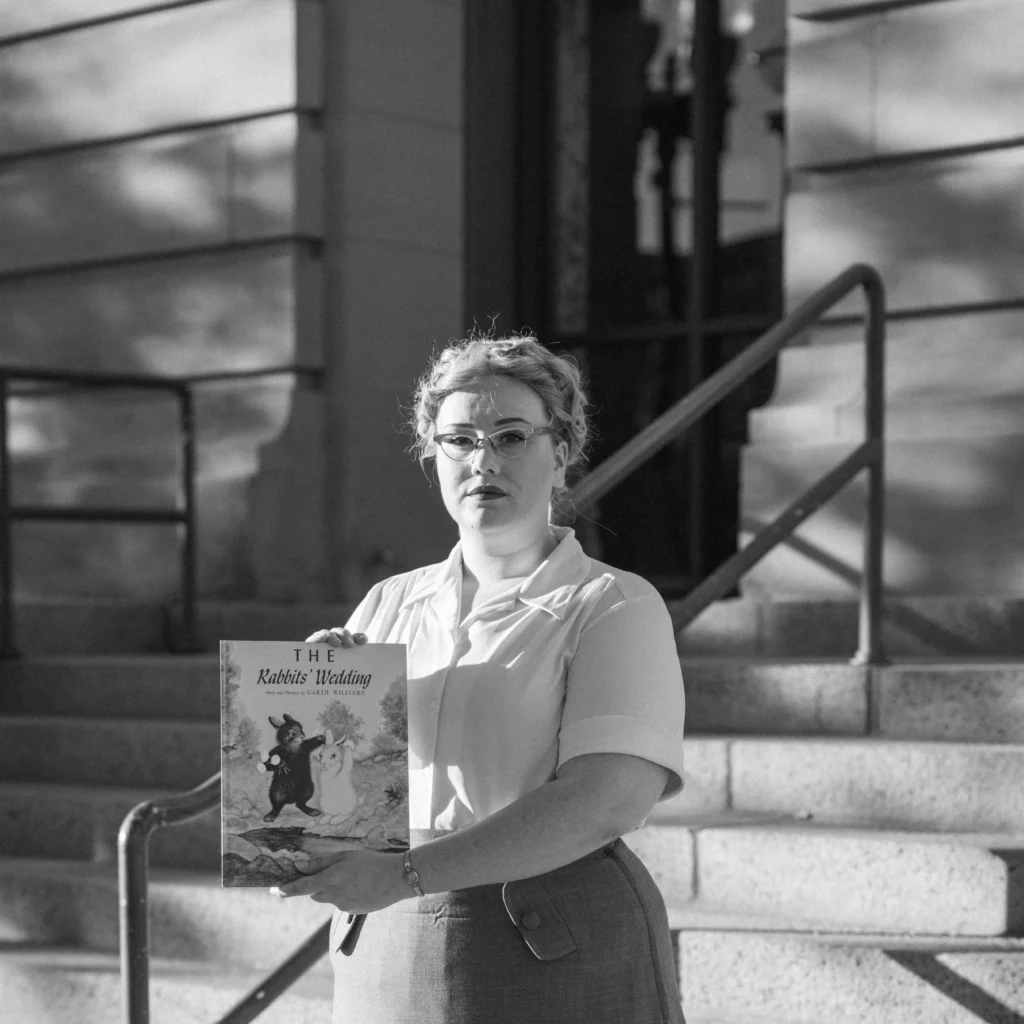
The book features a sweet romance between two rabbits, one black and one white. (In the play, Williams explains that the choice was primarily for visual contrast in a black-and-white book, though he doesn’t object to the interracial interpretation.) Paralleling Reed’s battle against censorship in the second story is the fictional relationship of Joshua Moore and Lily Whitfield, a black man and white woman who reconnect after years apart.
Stand-Out Performances
Aspen Bakner is excellent as Emily Reed. Bakner brings a direct, principled approach to a character who neither seeks the spotlight in the fight for equality nor backs down from it. Bakner is uncompromising, determined, and deeply engaging—especially when cracks in Reed’s armor begin to show. Her comedic timing while attempting to pronounce “Montgomery” like a true Alabamian and her insightful monologue comparing librarians to doctors were particularly memorable.
Bee Higgins and Ezekiel Binkerd are also strong as Lily and Joshua. Higgins navigates Lily’s internalized racism and her sincere desire to do good with nuance and subtlety. Their performance leaves Lily in a place of growth—still imperfect, but notably changed. Binkerd portrays Joshua with gentleness and strength. His grief over Lily’s inability to acknowledge how her actions altered Joshua’s life is palpable.
Maximillian Kratz is compelling as the segregationist senator, providing an emotionally volatile foil to Reed’s calm resolve without veering into caricature. Sara Johnson as Garth Williams and Ryland Thomason as Thomas Franklin also deliver solid performances—Johnson as an endearing narrator and Thomason as Reed’s eager ally. Additionally, Thomason and Bakner share one of the evening’s most memorable scenes following a misunderstanding between their characters.
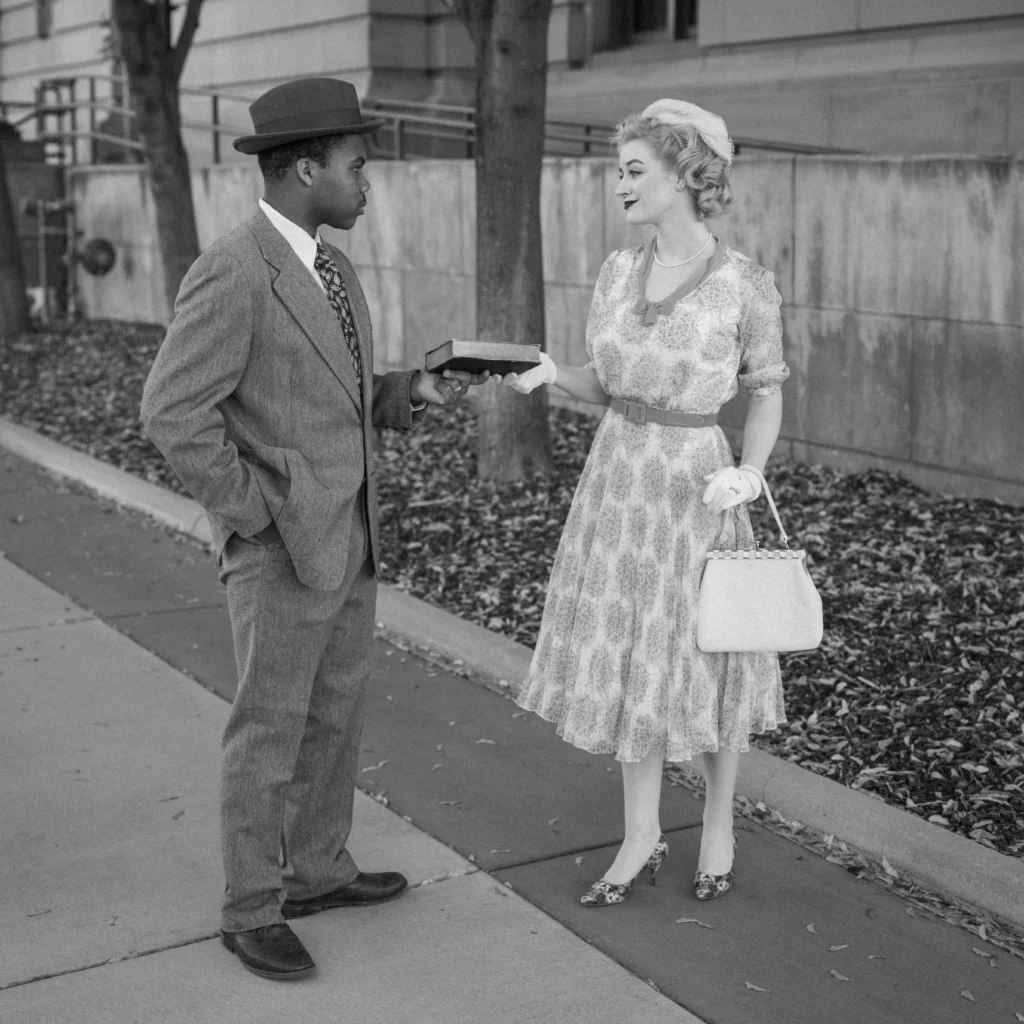
This is truly an ensemble piece, and Director Dawn Monique Williams deserves praise for using each cast member meaningfully. The inclusion of actors portraying children was a poignant reminder of who ultimately bears the impact of these societal conflicts. The cast’s care for the story and its relevance to current events is unmistakable.
Beautiful Production Design
The performances are enhanced by thoughtful design choices. Costumes by Fan Zhang and Aly Gibby, along with hair and makeup by Samantha Olsen, were lovely and varied—clearly tailored to each character, with attention to detail that suited the intimate Eccles Theatre space. Scenic design by Aisha Garcia was effective, using clever pillars to indicate setting changes quickly, complemented by minimal yet detailed set pieces and props designed by Delta Ackerson.
The actors perform without microphones, and while projection was generally strong, a few moments on opening night were difficult to hear—something that may affect theatergoers who are hard of hearing, though I’d be willing to bet the issue has already been addressed. In my years of attending shows in Utah, Weber State’s Theatre department consistently delivers quality storytelling. This production is no exception.
A Timely Story
Alabama Story opens and closes with characters asking for a story. So here’s one of my own: In 1998, zookeepers at the Central Park Zoo noticed that Roy and Silo, a bonded pair of male penguins, had built a nest and were taking turns sitting on a rock as if it were an egg. Unable to produce a chick, they were given an egg from a mother who had previously struggled to care for both of her offspring. The experiment succeeded, and Roy and Silo became fathers to Tango. Their story is told in the picture book And Tango Makes Three by Peter Parnell and Justin Richardson, illustrated by Henry Cole. Like The Rabbit’s Wedding, this book has faced widespread censorship, with the American Library Association—beloved by Ms. Reed—reporting it as the sixth most challenged book between 2010 and 2019.
I share this story because the issues raised in Alabama Story are not as distant as we might wish. It’s an important story to tell, and I hope the cast and crew of Weber’s production are proud to be telling it. I was deeply moved by their work. Go see it.
[box] Alabama Story plays at the Eccles Theatre in the Val A. Browning Center for the Performing Arts on the campus of Weber State University in Ogden. The production plays November 12-15, 2025 at 7:30 PM, with an ASL-interpreted performance on the 13th and a 2:00 PM matinee on the 15th.
Tickets are $16-$19 and seats are unassigned, so early arrival is recommended for best viewing. For more information visit https://www.weber.edu/theatre/theatre-season.html [/box]