

Image uploaded from Creative Commons.

OREM — For all the wonderful things can come out of attending live performances, not everyone enjoys going to see a show. Strobe lights that can spark creativity in one guest may induce seizure in another. The resonant music stirring the soul of one person may be the sensory overload of another. The decorum and expected behaviors of the theatre may not work well for someone with an autism spectrum disorder who feels the need to self-soothe, ask questions, or get up and move during a performance’s critical moments. Finding ways to make theatre spaces inclusive and accessible through the facilitation of Sensory Friendly performances has been a key part of my full time work with Utah Valley University’s TYE (Theatre for Youth and Education) Center.

Sensory Friendly accommodations are about performing the show in as pure a form as possible while being mindful of moments that may be VITAL to prepare audiences for. VITAL is an acronym to describe sensory overwhelming moments that may be Violent Intimate Triggering Abrupt or Loud.  Moments of violence, intimacy are relatively self-explanatory. Loudness is defined as anything peaking over 80 db through the production including music, screams, sound effects and more. Abrupt refers to those moments of sudden transition of light, staging, sound or motion that may overwhelm; hard to define, but easy to recognize. Triggering doesn’t refer to content warnings, though those are helpful. Instead, it refers to things that may be sustained environmental impacts, cause negative physical reactions or include things like frightening experiences which can be difficult emotionally regulate after. Many excellent companies such as SLAC, The Empress and Utah Shakespeare Festival, as well as some secondary schools throughout the state also engage in sensory friendly practices for their productions. There are host of techniques that we use in the TYE Center to prepare designers, actors, and audiences for a sensory friendly show.

In fall 2025, the TYE Center had the chance to bring in an intern named Josie Oswald from UVU’s  Wolverines Elevated program. Wolverines Elevated is a 3-year certificate program for young adults with intellectual disabilities and offers tailored academic, social, and career training to promote independence.

When asked about sensory tools and fidgets that work well in performance environments, Josie described both what she has seen used successfully with children on the spectrum and what she personally prefers for sensory overload and focus. Her first-person insights offer practical guidance for theatre venues planning sensory-friendly shows.

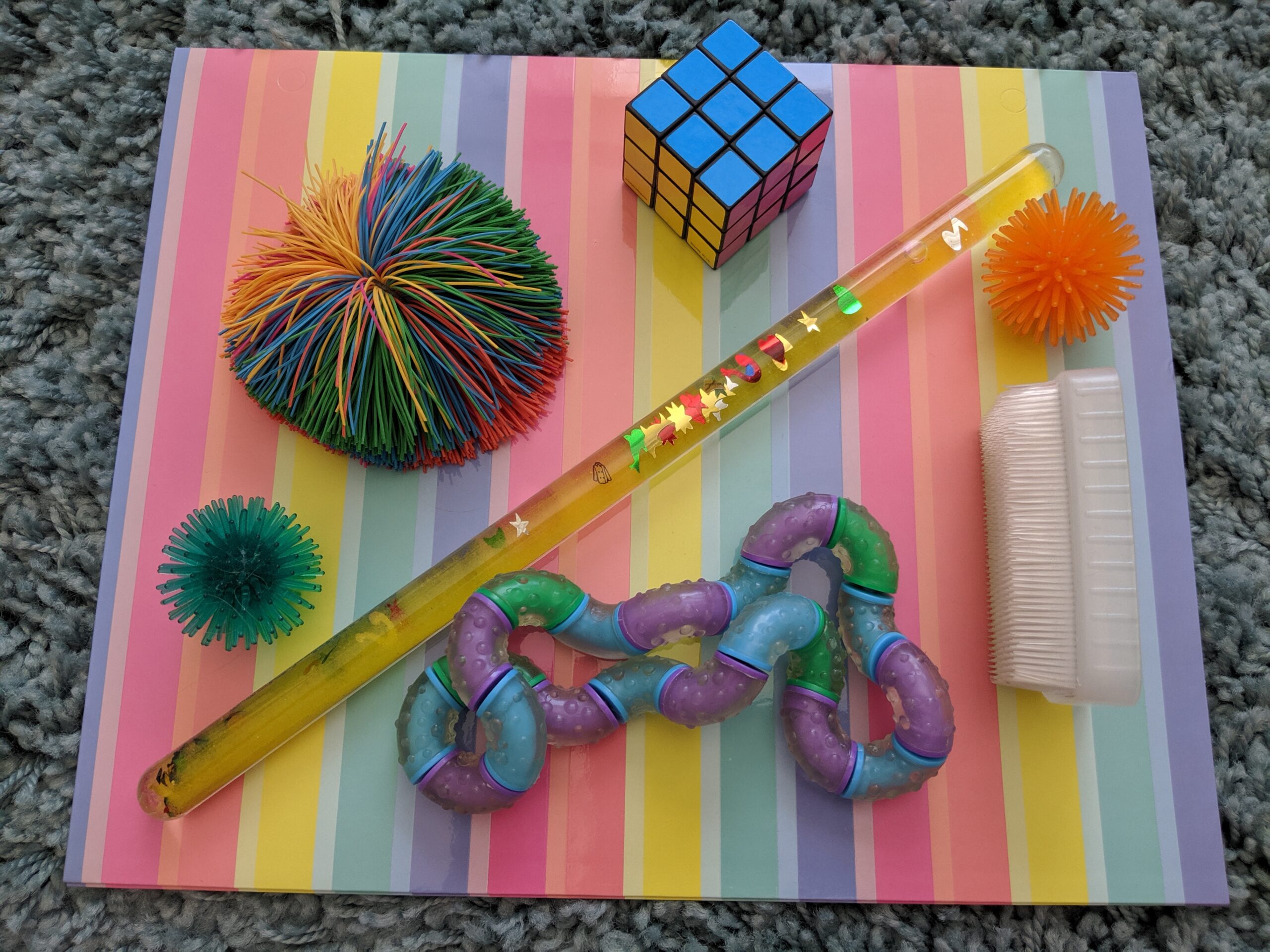
Josie explained that her mom teaches 5–8 year olds on the spectrum and regularly uses sensory tools in the classroom. “The tools she uses a lot are play-doh; it’s one of her kids’ favorite sensory tools she uses. She also uses compression vests; they help calm down. She also uses sand as well; they just love the texture of the sand. My mom also uses calming while her students are working. She also uses squeezing toys like balls and animals. The last thing she uses are sensory water bottles.” While not all of these tools fit easily into a theatre seat, they point toward what works: texture, gentle pressure, and quiet hand activity.

Speaking about her own experiences, Josie says, “For sensory overload, I like to use sensory headphones to help stay calm. I also use music when I get overwhelmed in public. When I feel stress, I use some calm music to help me stay calm. I also use fuzzy blankets some of the time, but most of the time I just use the same fuzzy blanket that I like.” For theatres, this supports allowing patrons to bring and use their own noise-reducing headphones and comfort items as part of sensory-friendly policies.

Josie also shared her favorite fidgets directly. Her recommended options for theatre use include: “Infiniti cube, the reason why it is easy to hold and it is also quiet too when you play with it.” She also recommends tangles because they are “easy to hold and it is also quiet too when you play with it.” She notes that squishies can work, but notes that these can become sticky and are often 1-patron use.

She adds, “I love anything 3D print fidgets. I have a lot of 3D print fidgets.” She highlights marble mesh fidgets, “especially when I put multiple marbles in it,” and thinking putty, “because it’s fun to play with, but I also like having it in my hands when I am working on homework to help stay focused.” She also likes “fidget spinners in many different sizes,” monkey noodles, and magnet fidgets that “come in different sizes and colors.”

Between shows, returnable items are sanitized for repeat usage while items such as ear plugs or squishy cubes are often left with patrons or discarded.

Her final point is simple and powerful for sensory-friendly theatre planning: offer choices, keep tools quiet and easy to hold, and remember that regulation looks different for each person.

ByScott Savage

Scott Savage is the Vice President of UTBA and scheduler/editor for the Central/South region. He holds an MFA in Theatre from the University of Central Florida and a BA in Theatre Arts Education from BYU. He is the program manager for UVU's TYE Center and has expertise in youth and family theatre as well as sensory and sensory friendly performance. He is the host of PodcastTYA, a member of the American Theatre Critics Association and husband and father to a bunch of wonderful Savages. He loves to hear your thoughts when you see the same shows. He can be reached at scott@utahtheatrebloggers.com