

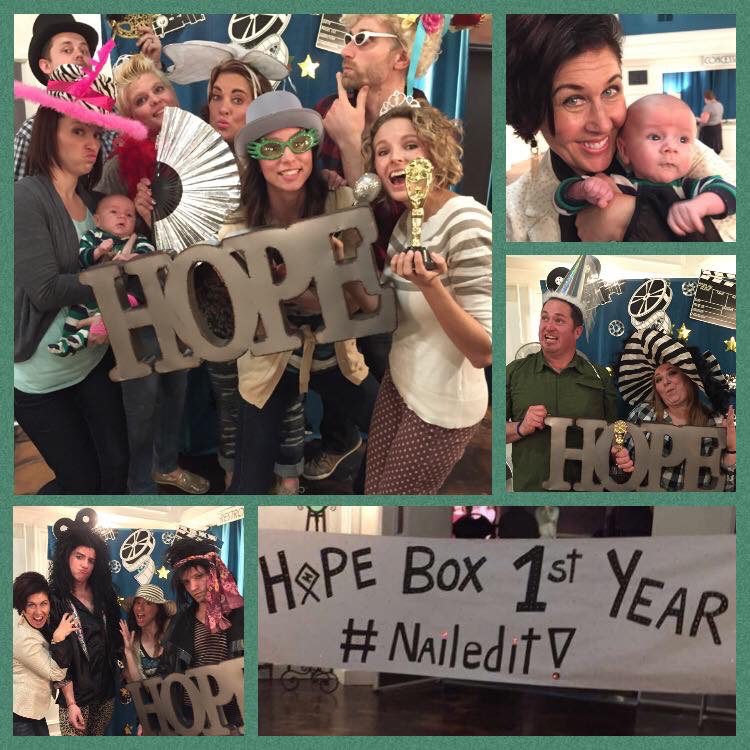
At This Utah Theatre is a new spotlight series from Utah Theatre Bloggers Association, curated by UTBA President Maren Scriven Swensen. Each installment offers readers a glimpse into the heart of a different theatre across the state—highlighting not just productions, but the people, histories, and missions that make each venue unique. We begin our journey in Kaysville, Utah, where the Hopebox Theatre has spent the last decade blending art with healing, community with compassion, and musicals with a mission of hope for those battling cancer.
What started as a hope to help others feel the joy and healing that art can bring ten years ago has blossomed into a community of care in Kaysville, Utah. Join us as we explore the Hopebox Theatre in this new feature at Utah Theatre Bloggers, At This Utah Theatre.

HISTORY
In 2014, Jan Williams was facing a very difficult time—she was undergoing cancer treatment for the third time. As the founder and teacher of Showstopper Productions in Kaysville, Utah, she had found great fulfillment in the performing arts. However, her declining health had made it too difficult to continue. One evening, a friend convinced her to leave the house, and she was surprised to find many of her students gathered together to sing for her. The gesture deeply moved her and sparked a desire to create something that could bring that same sense of love and encouragement to others.
That moment became the foundation for what would become the Hopebox Theatre.
Williams: “I remembered driving by this building a few weeks before and seeing it was for sale. It had been a church and, before that, a nursery. We were able to purchase it through a lease-to-own agreement, with plans to eventually buy it from the church.”
Williams partnered with Curtis Dalton, the father of one of her students, and together they began turning the dream into a reality. In February 2015, the theatre produced its first community show—9 to 5—transitioning from the youth-only Showstopper shows to a full community theatre model. But Hopebox’s mission was always more than just putting on shows.
Williams: “I kept thinking, ‘How could I make others feel what I felt that day?’ I had hope in the back of my mind. And I thought—something small, like a box. Hope. Hopebox. A whole box of hope. Yes. Beautiful. That’s how the name came about. And then I thought—what do we do with it? We want people fighting cancer to feel what I felt. To come to a production. To be part of a production.”
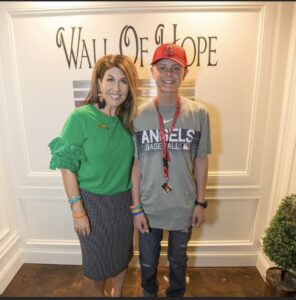
Building the Wall of Hope
Today, when you walk into the Hopebox Theatre, you’ll see around 100 names displayed on what is called the Wall of Hope. Every production at Hopebox—whether a Showstopper Jr. youth show or a main stage community production—honors a Wall of Hope recipient, someone currently battling cancer. In youth and teen shows, this is often a child, teacher, or relative of a cast member. For community shows, nominations can be submitted via the website and are selected by the board.
Williams: “We are a nonprofit 501(c)(3). We raise money at each show for the recipient. For our first recipient, we were thrilled to hand over $600. That doesn’t go far toward medical bills, but it was a meaningful start. Now, our recipients receive more—still not as much as they need, but more than we could give at the beginning. We invite the recipient to rehearsals and performances. Cast members do what they can. Sometimes they go to treatments with the recipient. We try to make them feel like family.”
If you see a small angel on a name plaque on the Wall of Hope, it means that recipient has passed away. During the holiday season, Hopebox also honors families who have recently lost loved ones to cancer, often dedicating their December production to two recipients.
Challenges with This Model of Theatre
Running a theatre is no easy task, and combining that with a charitable mission adds another layer of complexity. I asked Williams how they manage the balance between producing quality theatre and supporting their recipients.
Williams: “It certainly is a balance. We have some paid staff, and a lot of volunteers. We pay our production teams, box office, and concessions staff. Right now, all the actors and ushers are volunteers—they get to see the show, which helps. We are lucky to have so many amazing volunteers. But when we get donations, we want those to go to the recipients. So when the theatre itself needs something, we have to find other ways to fund it. Running a nonprofit takes a lot. That’s why I feel so lucky to have such a wonderful team.”
Over the past ten years, Hopebox has built a year-round season of main stage musicals and youth productions. The board proposes shows, and Williams gives final approval. Musicals are the most popular, though the company has produced a play and hopes to do more. When asked about her favorite memories, Williams was quick to focus on the people they’ve helped.

The Future of Hopebox Theatre
Utah has always been a strong supporter of theatre, and Hopebox has become a vital part of that landscape—offering ten years of hope, community, and meaningful art. I asked Williams what her dreams are for the next ten years.
Williams: “I want to fill the walls. I want them covered with the names of people we’ve helped. That’s my biggest goal. Sure, I’d like to outgrow this space someday, but if not, and we just add more performances, that’s okay too. I’m not trying to be a CenterPoint or a Hale. There’s something special about a small space with a mission to help people.”
On Friday, August 1, 2025, Hopebox will celebrate its 10-year anniversary with a gala featuring food, music, performances, and the company of cast members and recipients from past and present. One exciting addition coming soon? A brand new parking lot—a welcome upgrade for anyone familiar with the venue.
Williams and her team hope the Hopebox Theatre continues to be a place of healing, connection, and celebration through the arts for many years to come.
[box]
The Hopebox Theatre is located at 1700 S Frontage Rd, Kaysville, Utah 84037. They offer a year-round season of musicals and youth programs. To see a show or get involved, visit hopeboxtheatre.com.
If you would like to have your theatre featured in At This Utah Theatre, contact UTBA President Maren Scriven Swensen at maren@utartsjournal.com.
[/box]