

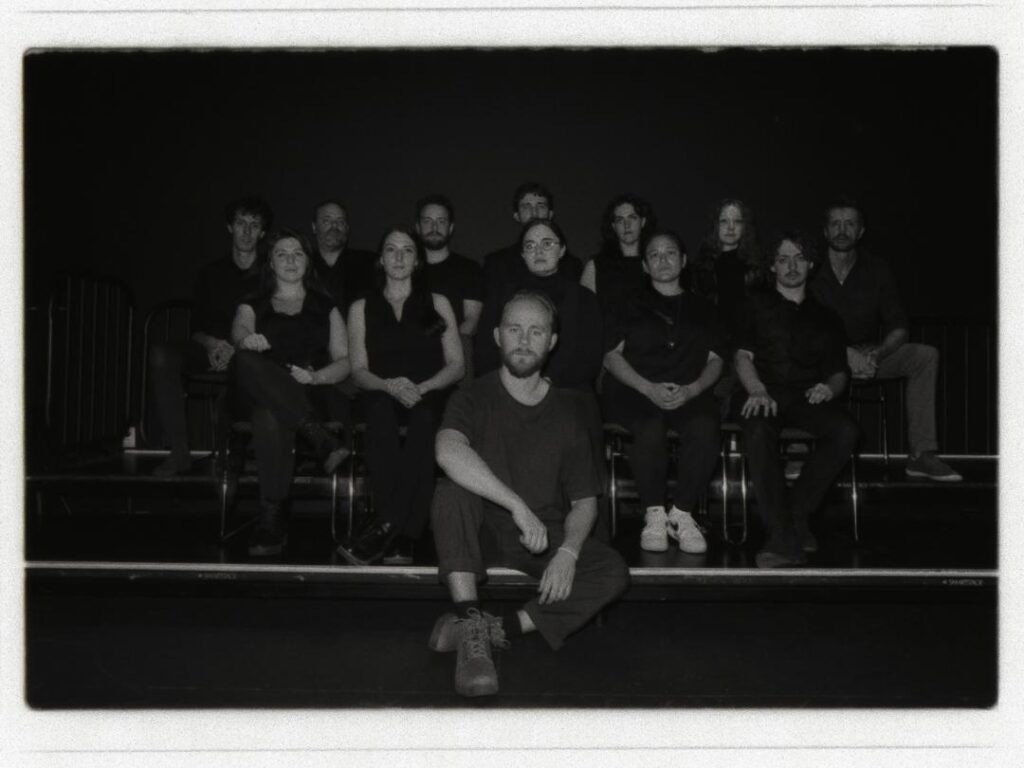
PROVO — If there’s one word to describe Whispering Room’s Julius Caesar, it’s “intense.” Every element of the production, from lights to direction and acting, were turned up to 11 (to borrow from This is Spinal Tap), creating a visceral, grisly and outstanding production. As Whispering Room’s second production, Julius Caesar continues the theatre company’s exploration of the darker side of the human experience.
Shakespeare’s historical play, first staged in 1599, focuses on the betrayal and assassination of the titular Roman dictator by his senatorial associates. Caesar ignores all warnings and premonitions from those around him that something is up, including prophets, soothsayers and even his own wife.
The production’s intensity begins immediately in scene one, with staccato electronic beats and bodies representing Roman citizens straining under cellophane (soundscape was by Kristian Huff). A drip cloth covered in blood and graffiti is fastened center stage, and a distorted, largely unintelligible voice serves as chorus.
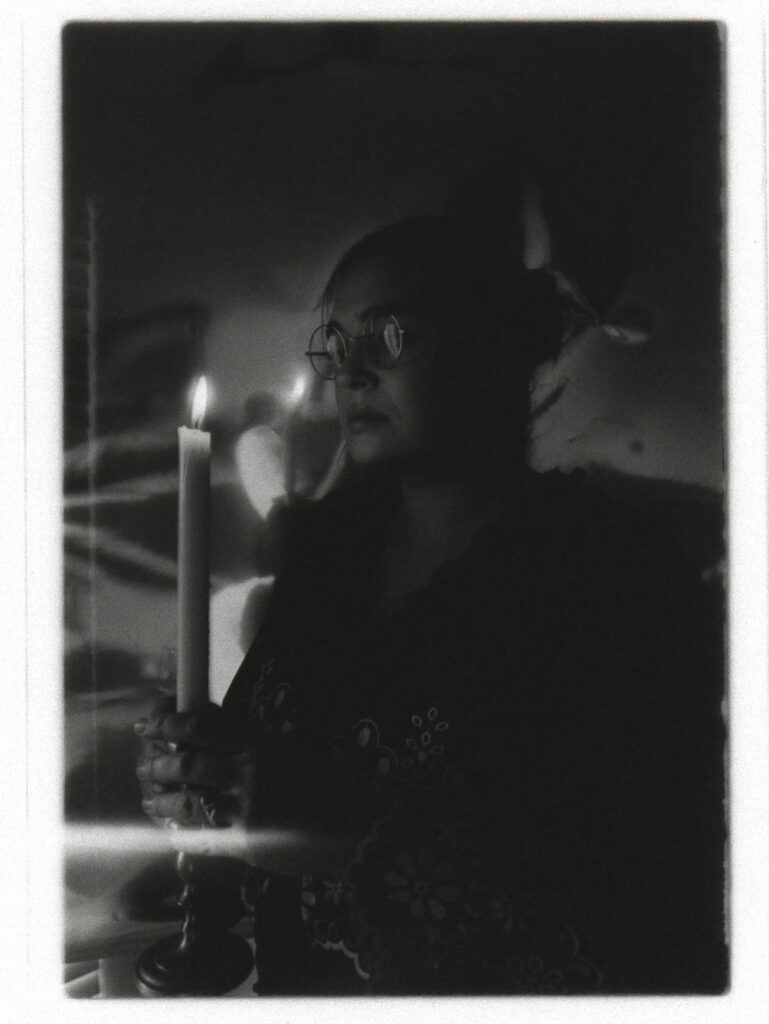
After this energetic prologue, the play proper begins with political intrigue among Roman officials. Cassius, played with wide-eyed, frothing intensity by Jason Hackney, wants Caesar dead. He’s too ambitious, the hot-headed Cassius argues, never mind that he refused a crown before—he won’t next time. Cassius’ dramatic foil is Brutus, played with dignity and stoicism by Clara Wright. While Brutus is originally skeptical (tellingly communicated by Clara Wright’s clenched, nervous fists), he eventually joins the plot.
The costumes (by director Dylan Hamilton Wright and cast) immediately distinguished the two conspirators. The wild, ambitious Cassius was dressed like a rock god in black jeans, necklace and open collared shirt. The logical Brutus wore glasses, a tight bun, and a conservative dark forest green dress that descended to Wrights’ wrists and ankles.
As Caesar, Bradley Moss expertly threaded the needle of ambiguity. Will he accept that crown? The gleam in his eye hints he just might. All leads demonstrated remarkable fluency with the language, making the production understandable and accessible. Speeches came vibrantly alive with carefully executed, natural expression, cadence and diction.
Each monologue was a delight, although none more than The Big One — Antony’s “Friends, Romans, countrymen” — in which he singlehanded turned the Roman citizens against the conspirators. Mikah Vaclaw played Antony with urgency and fire. At the end of the speech, I fought the urge to applaud mid-scene; my kingdom for an applause break!
Vaclaw and Clara Wright also shined in emotionally complicated scenes where their characters had to stifle their true intentions in order to please the mob. Elsewhere, Vaclaw demonstrated impressive emotive storytelling through tears and Clara Wright compellingly justified that murderous actions were “Not that I loved Caesar less, but that I loved Rome more.” In addition to monologues, Dylan Hamilton Wright did an equally admirable job developing the connection between actors; scenes flowed smoothly, with nary a miffed line.
Lighting design by Daniel Barton utilized intense washes of pure red, which brought key scenes into a realm of nightmares. At intermission, following Caesar’s murder, Barton used a clever combination of red and white to create a gorgeous ombre on the curtains, making it appear as if they had soaked up some of the blood (curtains were designed by Scout Stratford). Other technical aspects like sets and props were kept to a minimum, and the absence of programs and bows admirably put the play as a whole ahead of its individual pieces.
The production’s use of brutal, stylized violence seemed to weaken its internal logic at times. The assassination was transformed into a brutal, extended action sequence, with Caesar bludgeoning attackers with his fists like Bane, and taking dozens of stab wounds on his feet (fight choreography was by Dylan Hamilton Wright). The gruesome sequence climaxed with a literal bucket of blood. While it’s plausible that a man who can later return as a ghost possesses superhuman abilities, the rub is nothing until that point suggests him as anything but a man. In fact, his history of epilepsy suggested otherwise.
But if Caesar’s ability to take damage like Wolverine does make him an superhero, there are no supervillains here: assassins die by simple ritual suicide. Later, in a long sequence unsupported by the original text, the meek Cinna the Poet (portrayed by Alyssa Aramaki) is subjected to the beatdown of the century. Not even a genre-defying flying punch is enough to finish him off. Perhaps the production’s brutal treatment of these deaths emphasizes their unjust nature—but it also feels capricious and self indulgent.
I applaud Hive Collaborative for bringing local, high-quality theatre like this production of Julius Caesar to our community. The Hive is an island of originality in Utah County and worth the drive from much farther out. Its productions should be on the radar of every discerning theatre patron in Utah. (Plus, its seats are super comfy.)
Whispering Room’s Julius Caesar is a visceral, well-crafted, bloody confection with outstanding performances worth far more than the price of admission. At $25 it’s not just a steal, it’s grand theft. This is top-shelf stuff, with some of the best acting I’ve seen this year. And even if its intensity does undercut its integrity to some degree, the brutal violence on display does make one lesson clearer: always listen to your wife.
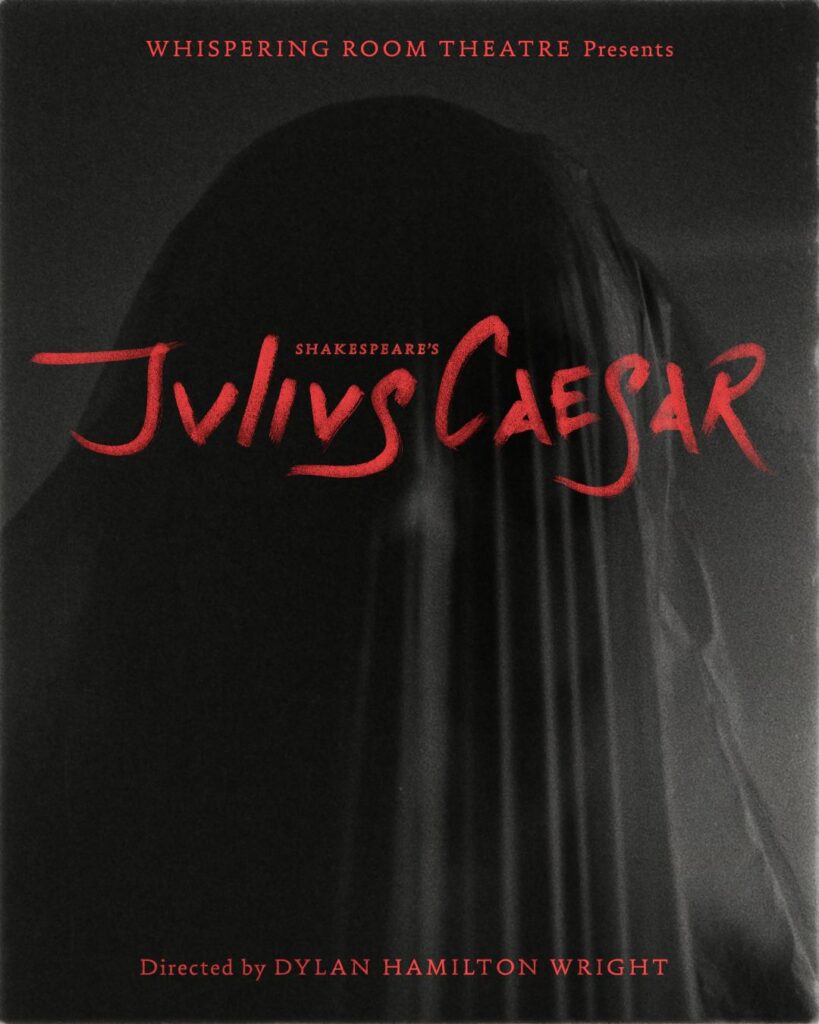
[box] Whispering Room Theatre’s production of Julius Caesar runs November 4-8 at The Hive Collaborative (290 W. 600 S. Provo). For info, visit instagram.com/whispering_room_theatre. For tickets, visit thehivecollaborative.com. [/box]