

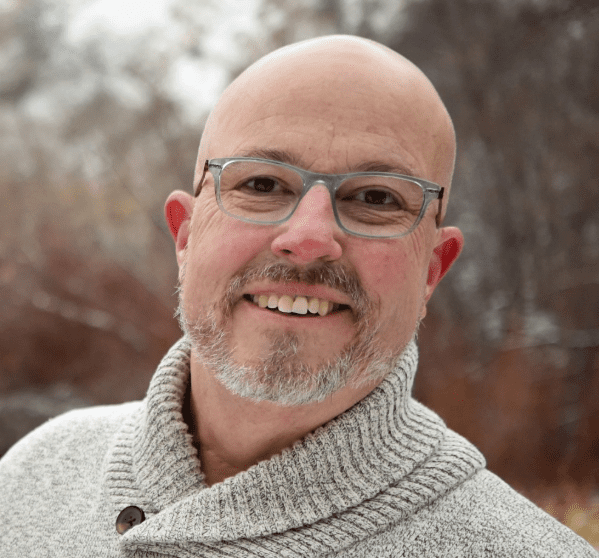
PLEASANT GROVE — Children’s theatre is often discussed in terms of its audience: young people, families, school groups, first-time theatergoers. But for Chris Hults, director of A Year with Frog and Toad and founder of the Utah Story Center, this medium isn’t “a warm-up for real theatre later.” To Hults, theatre for young audiences (TYA) deserves to be discussed in terms of artistry, complexity, and long-term cultural importance in reaching a broad range of people. After developing new works such as The Prince’s New Pet in 2021 Hults was was ready to tackle something he’s longed to do.
A Year With Frog and Toad
As part of Creekside Theatre Fest, Utah Story Center is partnering with Creekside on a production of the Tony-nominated musical with music by Robert Reale and Willie Reale’s book and lyrics A Year with Frog and Toad, based on Arnold Lobel’s beloved children’s books. Hults has been thinking about Frog and Toad for years. “For me, this is the most nuanced, complex, interesting, beautiful, brightly colored children’s musical,” says Hults.
Hults see this musical adaptation as rich in its roots from the source material stories and branches of continuing to reach new generations. . The source material is famously simple, but the stage version is more complex than some audiences may expect. The harmonies are surprisingly intricate. The language is elevated. The jokes draw on vaudeville rhythms. Hults sees that as one of the reasons the show works for children and adults at the same time. Young audiences can follow the friendship and humor, while older audiences can recognize the craft, the character work, and the emotional layers underneath.
One of the layers that Hults found in his engagement with the text is exploration of how Frog and Toad may not just be quirky, but instead characters who manifest the real mental health and wellness challenges that many artists and audience members may face. The show does not announce itself as a story about neurodiversity, nor does it ask its characters to stand in for a diagnosis. Instead, it tells a simple, beautiful story about friendship.
“The reason that I think this is working is because it works without any of that, and we’re not hitting anything on the nose,” Hults relates. Within that friendship, Hults found opportunities to deepen the stakes by looking at the ways Frog and Toad move through the world differently. The creative team for Frog and Toad began to explore what kinds of physical and design choices could be present in the events of these character’s lives, but seen through the lens of someone who simply doesn’t have the vocabulary to explain their own world view.
In discussing what audiences might notice about this production, Hults lit up talking about the kinds of easter eggs that show the vision he has for the show. One example is Toad’s clock. On the surface, Toad’s broken clock can play like a running joke. He no longer knows what to do because the clock, his external structure for moving through the day, is gone. But Hults sees something more urgent in that moment. If the clock is not just a prop but a coping mechanism, then its loss becomes much more than comic inconvenience. For someone who relies on structure, rules, and time to navigate the world, a broken clock can feel like a crisis. Suddenly, Toad’s panic is not silly. It is human.

Utah Story Center
Hults, a seasoned theatre maker and educator, has seen a void of the kind of professional TYA company that exists in so many major cities including Seattle, Charlotte, Dallas, Nashville and more. As such, in 2021, and coming out of the COVID-19 pandemic, Hults wanted to explore creating the kind of theatre he saw missing. When Utah Story Center was first being developed, he and his collaborators were interested in telling stories that could normalize neurodiversity. At first, Hults sought to explore theatrical works that dealt with autism and neurodiversity more directly, but he found that approach complicated. Plays that try to represent an entire community or diagnosis can unintentionally become reductive, even when well-intentioned. Conflict in live theatre depends on specificity, but neurodiversity is, by nature, varied and resisting a narrow definition or singularly defining experience.
Reductive children’s theatre is already a problem. Hults sees giving serious focus to a youth driven medium as essential. “Giving TYA the time and effort and love and care and professional treatment that all theater deserves — because I think that’s theater’s greatest opportunity to continue being as important as this has been for 2,000 years.”
That is part of what high-quality TYA can do when it is given enough attention. It does not have to talk down to children, flatten characters or simplify music. It can trust young audiences while also rewarding the adults who bring them. As parents and other stakeholders continue to push back on isolation, screen time, and loneliness, he describes theatre as something “AI proof”: a shared, in-person experience that depends on presence, surprise, and human connection. The act of gathering in a room together matters. The act of watching performers solve problems, stumble, connect, and care for one another matters. He hopes Utah Story Center and continued collaborations can increase those opportunities.
That is especially true in a story like Frog and Toad, where friendship is not presented as effortless perfection. Frog and Toad are not friends because everything is easy between them. Their relationship includes frustration, dependence, misunderstanding, tenderness, and patience. Hults hopes audiences will recognize themselves in both characters. Some may see themselves in Toad’s anxiety, rigidity, or need for structure. Others may see themselves in Frog’s steadiness, care, or quiet complications. Many will likely see a little of both.
Collaborative Theatre Making
The collaboration with Creekside Theatre Fest grew out of relationship and trust. Hults has worked with Creekside multiple times as both actor and director, and he speaks warmly about the organization and its founder, Jordan Long. Creekside’s repertory model requires careful financial and artistic balancing, and A Year with Frog and Toad presented a challenge. The licensing and production needs did not initially fit neatly into Creekside’s season plans, while Utah Story Center had been considering producing the show independently.
As both grappled with the challenges, a partnership was formed. Utah Story Center could help supplement the production while Creekside provided the infrastructure, space, and support of an established summer season. For Hults, that made the project more sustainable and more artistically supported than producing it alone.
That kind of collaboration may become increasingly necessary for Utah theatre until funding and engagement can surpass pre-pandemic levels. As production costs rise with inflation, organizations that share resources, audiences, spaces, and expertise may be better positioned to take creative risks. In this case, the shared value is clear: theatre for young audiences matters.
That belief is at the center of Utah Story Center’s mission moving forward. Hults said the organization intends to keep focusing on high-level and innovative TYA because he sees it as one of theatre’s greatest opportunities to remain meaningful. A child’s first encounter with theatre can shape how they understand stories, community, empathy, and imagination. A family production can become more than an afternoon outing; it can become a shared memory, a conversation starter, and an invitation to return.
In the end, that may be the quiet power of Frog and Toad. It looks simple. It feels comfy. But underneath the bright colors and catchy songs about easting cookies and raking leaves is a deeply theatrical reminder that people need each other, that friendship takes work, and that children can and do fully engage with all aspects of human experiences, whether they can articulate them yet or not.
MORE INFO: A Year with Frog and Toad was reviewed by UTBA journalist Brook Taylor and runs select dates until July 2nd, 2026. It is being performed at Heritage Park, (4425 W Cedar Hills Dr, Cedar Hills, UT 84062), and tickets range from $20-$25. Seating is on a hillside, so bring a blanket or lawn chair. For more information and tickets, visit https://www.creeksidetheatrefest.org To keep up with the latest from Utah Story Center, check out https://www.utstory.org/