

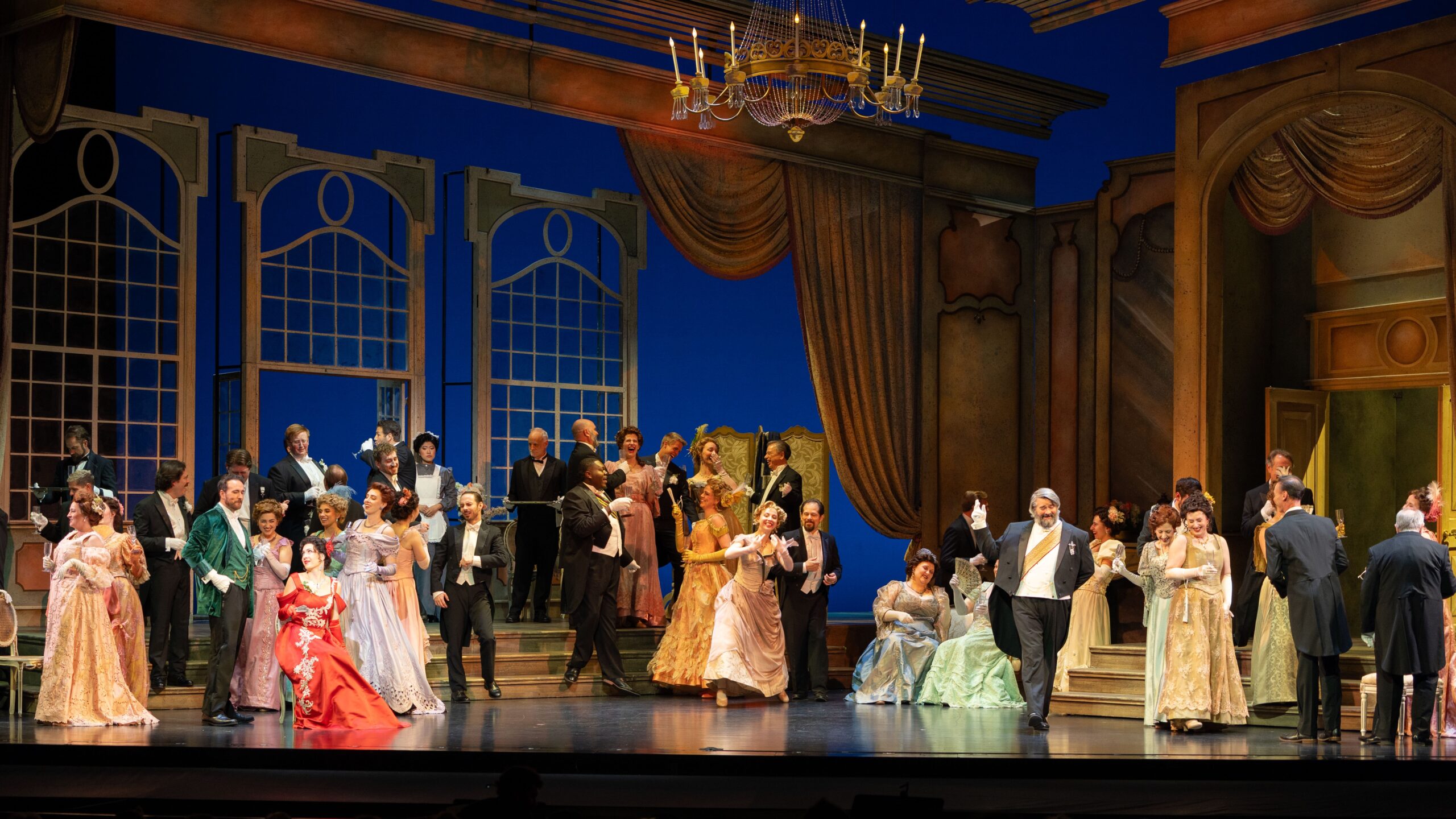
SALT LAKE CITY — Utah Opera’s current production of Verdi’s La Traviata at the Capitol Theater offers thrilling vocal performances and a committed chorus, even as some staging choices muddy the clarity of the storytelling. This traditional production succeeds most powerfully when it trusts Verdi’s score and the emotional truth of its performers.
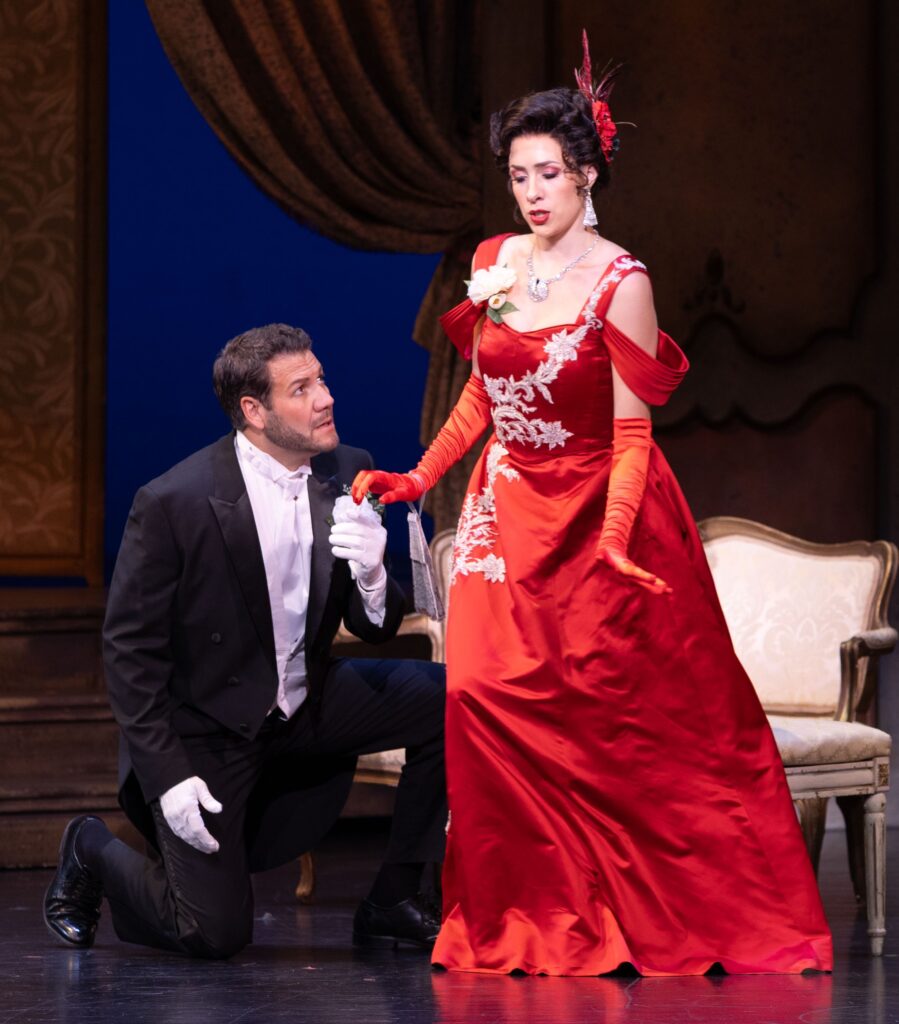
As Violetta Valéry, soprano Lydia Katarina delivered a true tour-de-force performance. Her voice was stunningly bright throughout the evening, ringing effortlessly over ensembles while still maintaining warmth and emotion in quieter moments. Particularly impressive was her ability to sustain vocal brilliance deep into the final act, where Verdi asks for both fragility and endurance from the role. Her “Sempre libera” sparkled with energy and precision, while the final scenes carried genuine emotional weight without sacrificing vocal quality.
The evening was equally strengthened by the commanding Germont, sung by baritone Weston Hurt, whose rich sound and grounded acting brought dignity and complexity to a character who can easily become one-dimensional. His scenes with Violetta were among the strongest musical moments of the night, driven by excellent phrasing and a clear understanding of the text.
It was a great pleasure to see local favorite Isaac Hurtado singing the lead tenor role of Alfredo Germont. He perfectly captured the impetuous nature of the young bourgeois, and though his voice didn’t have the same cut as his principal colleagues, it was much appreciated by this reviewer to see a Utah singer in a leading role on Utah’s largest opera stage. Kudos are also due to Hurtado for jumping into the role at little more than a week’s notice.
The Utah Symphony, conducted from the pit by Maestro Robert Tweton, was in fine form with excellent balance and exquisite dynamic contrast.
The chorus, wonderfully prepared by chorus master Austin McWilliams, deserves special recognition. Their diction was consistently crisp and understandable, and the dynamic contrasts throughout the evening added excitement and shape to the larger ensemble scenes. Whether reveling at Flora’s party or underscoring the tragedy of the final act, the chorus added energy and intensity to the evening.
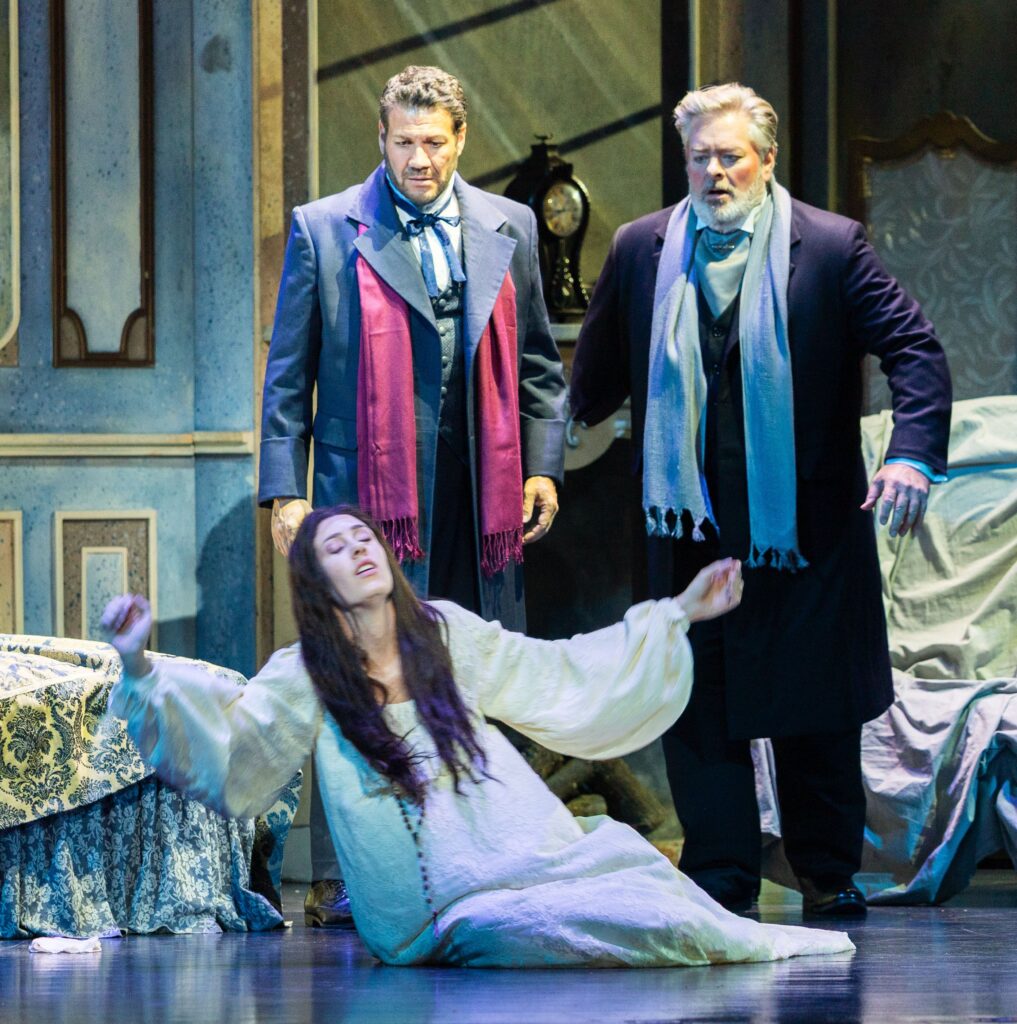
Unfortunately, some of the staging in those very crowd scenes, directed by Garnett Bruce, lacked clarity. Important plot points were lost in the busy blocking, including the moment when Violetta refuses the gift of a necklace from Barone Douphol (sung by Christopher Clayton), foreshadowing her choice to leave the life of a “kept woman” for a simple country life and true love with Alfredo. It was also easy to miss her fainting spell, the paroxysms of coughing, and Dottore Grenville’s (sung by Kevin Nakatani) close attention. Instead, the audience was left searching through stage traffic to understand what had occurred. I know the story well and knew what to watch for, but my partner never knew where to look onstage and missed a lot of the plot.
Similarly, the choreography by Daniel Charon often distracted more than it enhanced. The movement vocabulary felt like a mish-mash of competing styles, with the dancers in early 19th-century evening wear but using contemporary movements. They danced during the overture and the beginning of the final act, when Violetta’s end is very near. They also danced during Flora’s party as the fortune-tellers and the bull-fighters, which is a more traditional use of choreography in this opera. They seemed to represent Violetta’s memories of her former party lifestyle in the final act, but were a confusing beginning to the production and seemed to be tacked on and not well thought-through.
Even so, Verdi’s masterpiece remains difficult to resist when sung this well. Between the luminous Violetta, the impressive Germont, and the beautifully prepared chorus, this production offers much for opera lovers to admire, even if some directorial choices occasionally obscure details of the story.
Utah Opera’s La Traviata runs May 9 & 15, 2026 at 7:30 PM, May 11 & 13, 2026 at 7:00 PM, and May 17, 2026 at 2:00PM at the Janet Quinney Lawson Capitol Theatre, 50 W 200 S Salt Lake City, UT. Tickets are $14.50-$117. For more information, go to utahopera.org