

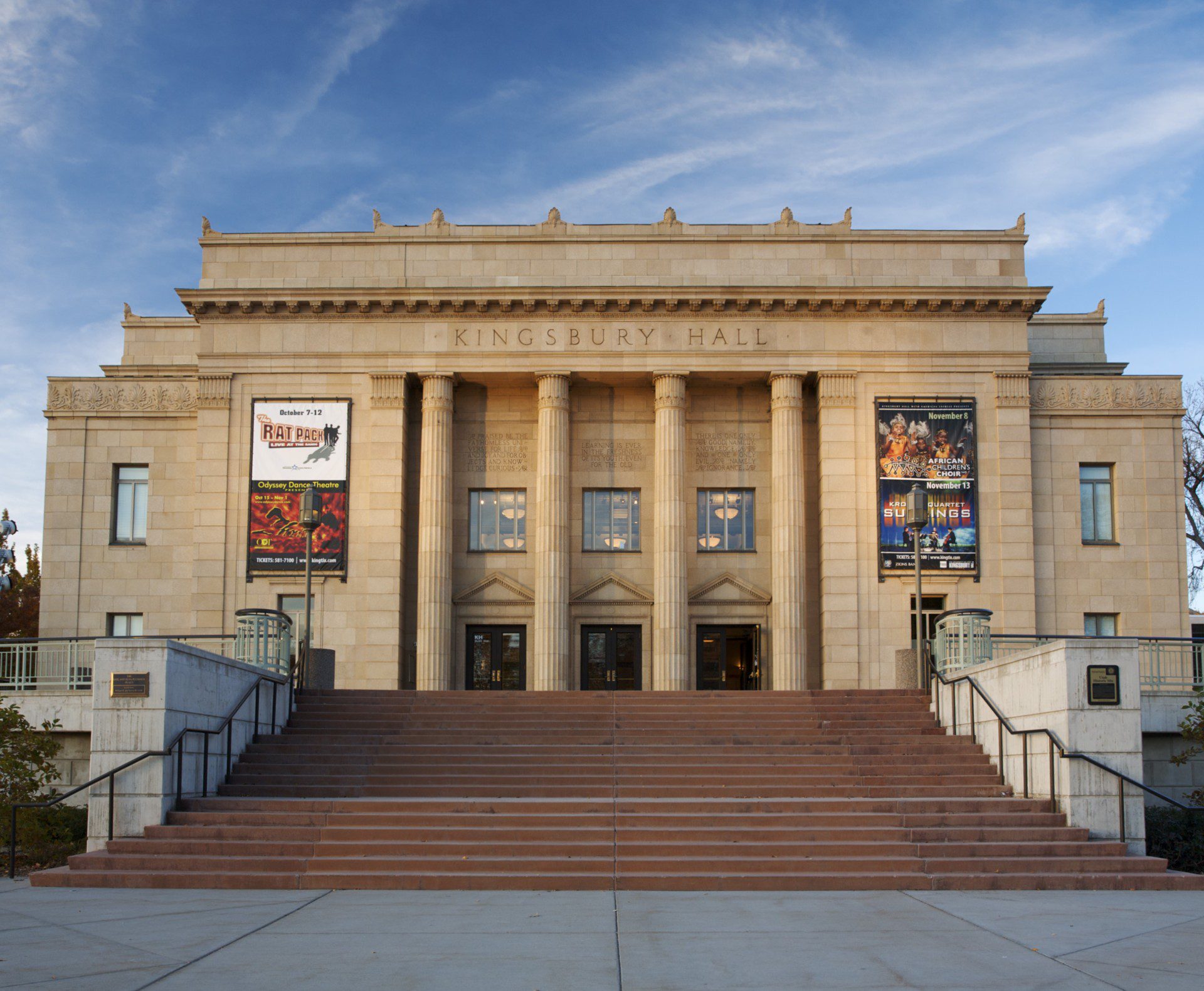
SALT LAKE CITY — As Kingsbury Hall approaches its 100th anniversary in 2030, UtahPresents and the University of Utah have announced a $3 million state-funded interior renovation intended to preserve one of Utah’s most significant cultural venues while improving the audience experience for future generations.
The project’s main focus will be replacing the audience seating inside the 1,900-seat historic theater, according to an announcement shared by Valentine PR on behalf of UtahPresents. Planning, design, scope, and timeline details are still being developed, but construction is currently anticipated between June and August 2027. UtahPresents says no confirmed Kingsbury Hall events are expected to be affected by the renovation.
The University of Utah’s Planning, Design & Construction office is expected to post a formal architectural and engineering bid request through BidNet Direct, opening the next phase of planning for the project.
The timing is notable. Kingsbury Hall opened on May 22, 1930, making the planned renovation part of a broader moment of reflection for a venue now only a few years away from its centennial. Historical records describe the hall as having been built to provide the university with an assembly hall and space for students, while also serving the Speech Arts Department and Theatre Program. For decades, it became a major site for lectures, concerts, theatre, dance, and other cultural events along the Wasatch Front.
Public history records also show that Kingsbury Hall was the University of Utah’s first major auditorium, funded by the State of Utah at $275,000 and designed for theatrical productions, assemblies, commencement exercises, and other university gatherings. It was named for Joseph T. Kingsbury, who served as president of the University of Utah from 1897 to 1926.
The building itself has long been recognized as architecturally important. The National Register of Historic Places nomination materials for the University Circle historic district describe Kingsbury Hall as a 1930 building created to meet a “critical need for an auditorium.” Architects Edward O. Anderson and Lorenzo S. Young won the design competition, creating a building in a Neo-Classical style with Egyptian Revival influence. The nomination also notes the hall’s foyer, lobby, crown molding, murals by Florence E. Ware, gold-painted detailing, and other architectural features.
That historic identity has not kept Kingsbury Hall frozen in the past. University archival records note that the hall underwent a major two-year, $14 million renovation beginning in June 1994 and lasting until March 25, 1996. Those same records also describe Kingsbury Hall’s broader cultural role, including its history as a home for groups such as Ballet West, Repertory Dance Theatre, Ririe-Woodbury Dance Company, Utah Opera, and Utah Symphony before those organizations moved downtown in the late 1970s.
For UtahPresents, the current renovation announcement connects the hall’s architectural legacy with its ongoing role as a contemporary presenting venue. UtahPresents describes itself as the University of Utah presenter that connects audiences with “world-class artists and transformative cultural experiences” while serving as steward of Kingsbury Hall.
That mission is already visible in the announced UtahPresents season. The organization has listed seven Kingsbury Hall events for 2026–2027, including The Limón Dance Company on September 24, Branford Marsalis and Dianne Reeves celebrating John Coltrane on October 7, Cloud Gate Dance Theatre of Taiwan on November 17, Stella Cole’s Christmas Dreaming on December 18, Compagnie Hervé Koubi on March 2, Endea Owens & The Cookout on March 4, and Hot House West Swing Orchestra featuring Bria Skonberg on April 16.
Kingsbury Hall has also been part of Utah Theatre Blogger’s Assocation’s own reviewing history. The archive reflects the venue’s wide range: national tours, university productions, experimental work, family programming, and major touring artists have all passed through its doors.
In 2011, UTBA reviewed the Broadway Across America national tour of Spring Awakening at Kingsbury Hall, noting both the controversial power of the musical and the particular expectations that come with a touring production in a major venue. A year later, a review of the national tour of Rock of Ages not only covered the show but specifically praised Kingsbury Hall and Broadway Across America for audience service when a ticketing mistake threatened the reviewer’s attendance.
The venue has also hosted touring and interdisciplinary work beyond traditional Broadway fare. In 2024, UTBA reviewed Lisa D’Amour’s Ocean Filibuster at Kingsbury Hall, describing a performance that used the venue’s large stage, projections, lighting, sound, and theatrical scale to explore environmental questions through performance.
Those reviews reflect the same dual identity Kingsbury Hall has carried for nearly a century: it is both a historic campus landmark and an active cultural space. Its stage has held university theatre, Broadway tours, dance companies, lectures, concerts, experimental performance, and community gatherings. Its architectural details belong to the University of Utah’s past, but its programming continues to point outward — toward Salt Lake City, Utah audiences, and visiting artists from around the world.
The planned seating renovation may seem practical on the surface, but for a venue like Kingsbury Hall, audience seating is central to the relationship between history and use. A historic theater only remains vital if people can continue to gather comfortably inside it. As Kingsbury Hall nears its centennial, the project signals an effort to keep the building’s character intact while making sure the hall remains usable, welcoming, and ready for the next generation of Utah audiences.
More information about the renovation is expected as planning and design move forward. For now, the announcement places Kingsbury Hall at a familiar intersection: honoring the past while preparing for the next curtain.